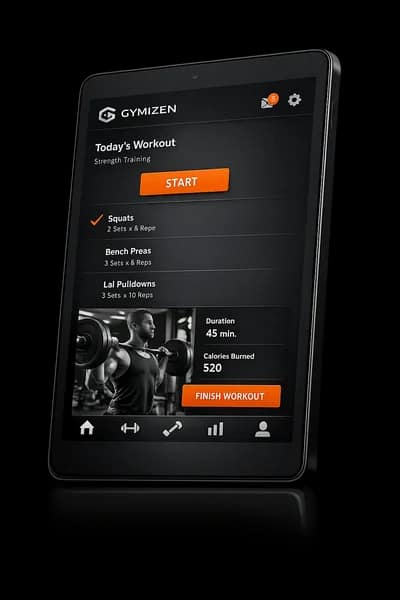


The most dangerous moment in boutique fitness operations is when a class is “kind of full.” It looks healthy on the surface. Revenue is coming in. The room has energy. The Instagram story does its job. And yet that’s where the hidden retention leak forms: the class isn’t full enough to justify operational discipline, but it’s full enough to create friction—booking anxiety, waitlist anger, coach stress, and “I couldn’t get in this week” attendance gaps that quietly become churn.
This guide is about building what I call the Capacity Flywheel: a repeatable operating system that turns demand (full classes) into better member outcomes (habit, progress, community) while protecting your team from chaos and your brand from overbooking drama. The goal is not to maximize utilization at all costs. The goal is to make access feel predictable, fair, and coachable—so members build routine and stay.
If you run a yoga studio, the flywheel is about protecting “my spot” without turning booking into a competitive sport. If you run pilates, it’s about reformer inventory, strict capacity, and instructors who can actually teach rather than manage resentment. If you run CrossFit, it’s about class caps that preserve coaching quality while keeping prime time accessible. If you run martial arts or boxing, it’s about matching mat/round capacity to instructor attention and ensuring skill progression doesn’t collapse under crowding.
The capacity problem most owners are actually trying to solve
Operators usually describe the problem like this: “My 6am and 5:30pm are full. The rest are empty. I need more members.” Sometimes that’s true. Often, the deeper issue is capacity allocation—how access to your most valuable inventory (prime-time slots) is distributed across different member segments.
Here’s the tell: if your prime-time classes have waitlists but you still hear “I’m thinking of canceling because I can never get in,” your problem isn’t marketing. It’s that demand is being converted into frustration instead of habit.
- Demand without governance creates perceived unfairness (the same people always get in).
- Governance without flexibility creates rigidity (rules that feel punitive or out of touch).
- Flexibility without staffing creates burnout (front desk exceptions, coach pressure, constant “can you squeeze me in?”).
- Staffing without demand signals creates waste (adding classes that don’t fill, or adding coaches at the wrong times).
The Capacity Flywheel solves this by aligning four things: inventory (your schedule and caps), access rules (booking windows and waitlists), staffing (who is needed when), and member behavior (habits you’re shaping).
The Capacity Flywheel (overview)
Think of your operation as a flywheel with five stages. Each stage reduces churn in a different way—and each stage depends on the one before it.
- Define the “service promise” per class type (what quality requires: coaching attention, equipment, tempo, emotional vibe).
- Set caps that protect the promise (and stop negotiating it in real time).
- Design access rules that feel fair (booking windows, late-cancel rules, and waitlists that reward consistent behavior).
- Staff to the promise (not to hope, not to vibes, and not to last month’s spreadsheet).
- Use demand signals to tune the schedule (expand, split, or redesign the class mix instead of just “add more”).
If you skip to step 5 (“add more classes”) without steps 1–4, you don’t build momentum—you add complexity. You end up with more calendar slots, more coach coordination, more subscale classes, and more retention risk because quality becomes inconsistent.
1) Define the service promise per class type (before you argue about caps)
Capacity is not a number; it’s a quality constraint. Before you pick “18” or “24,” define what you’re promising for that modality and class format. Otherwise you’ll keep renegotiating the promise every time a VIP wants in.
A useful way to frame the service promise is to write it in one sentence: “In this class, a member can expect ____.” Then ask what breaks first when the room gets crowded.
- Yoga: hands-on assists (if you do them), spacing, calmness, safe transitions. What breaks first is usually space and emotional experience.
- Pilates (reformer): equipment inventory is fixed. What breaks first is safety and instructor attention when you stack too many new clients in one session.
- CrossFit: coaching bandwidth, ability to correct movement, and equipment flow. What breaks first is coaching ratio and traffic jams.
- Martial arts: mat space, partner rotation, and instructor correction. What breaks first is skill feedback—students get “sweaty but not better.”
- Boxing: bag availability, pad work time, and coach attention. What breaks first is turn-taking—too much waiting, not enough work.
Once the service promise is explicit, you can stop arguing about caps as if they’re purely financial. You’re choosing the point where quality drops below your brand threshold.
Operator note: If you can’t say what the promise is, your team will default to two bad strategies: (1) “squeeze everyone in” to avoid conflict, or (2) “hold the line” in a way that feels arbitrary. Neither builds trust.
2) Set caps that protect the promise (and stop negotiating them at the front desk)
A cap is the simplest capacity tool you have. It’s also the most emotionally charged because it turns “want” into “no.” The mistake is treating caps like a static rule rather than a design choice that must match (a) the promise, (b) staffing, and (c) your membership mix.
Practical cap-setting is not “how many can fit.” It’s “how many can be served well.” Start with constraints you can’t change, then add the human constraint.
- Hard constraints: reformers, bags, benches, rowers, floor stations, parking, shower capacity.
- Flow constraints: transitions, warm-up space, partner work, changeover between classes.
- Human constraints: coach-to-member ratio that preserves corrections, names, and personal attention.
Then consider a nuance that matters in every boutique vertical: newness density. Ten experienced regulars might require less supervision than ten beginners. If you don’t account for this, you’ll either cap too low (leaving revenue on the table) or cap too high (creating a class that feels unsafe and impersonal).
Two cap strategies that work in the real world:
- Single cap + staffing trigger: keep the cap stable, but add a second coach when the roster passes a threshold (for example, when you exceed your “correction bandwidth”). This keeps the member experience consistent even when demand spikes.
- Two caps by format: run “Foundations / Intro” classes with a lower cap and “Level 2 / Mixed” classes with a higher cap. This is especially effective in pilates, CrossFit, martial arts fundamentals, and boxing technique sessions.
What not to do: change caps weekly based on how you feel. Members experience that as randomness. Staff experience it as constant exception pressure. The flywheel needs consistency to create trust.
3) Design access rules that feel fair (booking windows, waitlists, and “earned access”)
The #1 retention killer in high-demand schedules is access anxiety: members feel like they’re paying for something they can’t reliably use. Even if they attend 2–3 times per week, the emotional experience becomes “I’m always fighting for a spot.”
Fairness is not the same as equality. Equality is “everyone can book 14 days out.” Fairness is “the system rewards the behavior we want, and it’s consistent.” To design fair access rules, start with the behaviors you’re trying to shape:
- Show up as booked (reduce no-shows).
- Cancel early if plans change (protect waitlist movement).
- Try off-peak (smooth demand without “forcing” it).
- Build a routine (stable weekly attendance beats sporadic bursts).
A strong access design uses three levers: booking window, waitlist behavior, and friction (late cancel/no-show consequences). Here’s how to think about them operationally.
Booking windows: stop rewarding the fastest thumbs
Long booking windows (14–30 days) sound member-friendly, but they often create a “calendar land grab.” The most organized members book everything, then late-cancel as life happens. That blocks access for the very members who are trying to build consistency.
Instead of a single long window, consider a staggered access model that gives structure to different segments:
- Standard window (e.g., 7 days): members can plan their week without hoarding a month.
- Routine protection: allow “recurring reservations” only for members who demonstrate consistent attendance (more on that below). This is powerful in reformer pilates and limited-cap small group training.
- Short window for high-demand formats: if one class type (e.g., hot yoga at 5:30pm) is the access bottleneck, shorten the booking horizon for that format rather than punishing the entire schedule.
Waitlists: treat them as a conversion tool, not a complaint box
A waitlist that doesn’t move trains members to give up. A waitlist that moves too late creates day-of chaos. The operational goal is to build a waitlist members trust: if they join, they have a real chance, and the timing is predictable.
- Define the “movement window”: by when should a spot realistically open? If most cancellations happen within 2 hours, members won’t rearrange their day based on the waitlist.
- Use an auto-promotion cutoff: after a certain time, stop auto-adding people and require confirmation. This protects members from accidental late additions and protects staff from last-minute surprise rosters.
- Coach and front desk scripts: when members ask, “Will I get in?” your team should have one consistent answer based on historical behavior (not on hope).
Friction: late cancel and no-show policies should be boring
The best late cancel/no-show policies are not harsh—they’re predictable. Members churn when rules feel personal, inconsistent, or selectively enforced. Your goal is to remove personality from policy. Make it boring. Make it consistent. Make exceptions rare and approval-gated.
A practical heuristic: if your team has to argue about a late cancel more than once a week, your policy is either unclear, misaligned to your market, or you’ve trained members that negotiating works.
Retention tradeoff: Too much friction drives resentment. Too little friction drives waitlist stagnation and “ghost bookings.” The flywheel works when friction protects access for members who show up.
Earned access: the missing middle between “VIP favoritism” and “first come, first served”
Boutique operators often get stuck between two bad options:
- VIP favoritism: staff “squeeze in” favorites, which destroys fairness and inflames quiet churn.
- First come, first served: rewards the fastest and most anxious, not the most consistent.
Earned access is the healthier middle. You create privileges that are earned by behavior, not by personality. Examples that work well:
- Recurring booking eligibility for members with consistent attendance and low late-cancel rates (protects routine builders).
- Priority waitlist for members who haven’t attended in X days and are otherwise in good standing (a subtle churn-prevention lever).
- Prime-time access tokens (conceptually): members “earn” the right to book peak classes further out by completing off-peak sessions or maintaining a clean attendance record.
You don’t need to publicize every detail. But your internal rule should be clear: privileges exist to protect retention-driving behavior. Not to make staff feel generous.
4) Staff to the promise: avoid the two staffing traps
Staffing is where capacity decisions become real. And most studios fall into one of two traps:
- Trap A: staffing to average attendance. You staff like it’s a “normal day,” then demand spikes and your team gets crushed. Members feel the drop in coaching attention immediately.
- Trap B: staffing to potential maximum. You overstaff to feel safe, then half your classes are subscale and your labor percentage gets ugly—leading to reactive cutbacks that create inconsistency.
The flywheel approach is to staff to segments and formats, not to a monthly average. Here are the staffing questions that matter more than “How many people are booked?”
- How many beginners are in the room? New clients consume more attention. That’s not bad—it’s your growth engine. But it’s also a staffing input.
- Is this a technique format or a conditioning format? Technique requires correction bandwidth. Conditioning tolerates more independence.
- Is the coach also the salesperson? If coaches are expected to greet, upsell, troubleshoot bookings, and teach, their effective teaching capacity is lower.
- What is the “handoff load”? When transitions between classes are tight, you need a front desk or floor support person, or you’ll create chronic lateness and missed touchpoints.
A practical staffing model for high-demand studios is a two-tier coverage plan:
- Base coverage: the minimum staff needed to deliver the promise at the cap.
- Surge coverage: a pre-planned add-on (assistant coach, second instructor, floor support) triggered by demand signals you can measure (waitlist depth, newness density, or historical show rate).
This is how you avoid “hero staff” culture. When surge coverage is planned, you don’t rely on last-minute favors or guilt texts. You run a stable operation, which is the foundation of retention.
5) Use demand signals to tune the schedule (expand, split, or redesign)
If you only react to full classes by adding more of the same, you’ll eventually hit a ceiling: coach availability, room constraints, and community dilution. The flywheel asks a more strategic question: What is demand trying to tell you?
When a class has consistent waitlists, you generally have four options. Each has different retention effects.
- Expand: add another section at a nearby time. Best when the demand is broad (many members want it) and you have staffing depth. Retention effect: improves access and routine building.
- Split: create two tracks (e.g., Foundations and Level 2) at the same time block or adjacent blocks. Best when the roster is mixed and beginners are dragging down the experience for regulars (or vice versa). Retention effect: improves progress velocity, reduces intimidation, protects community.
- Redesign: adjust the format so the same time slot can serve more people without breaking the promise (e.g., stations, structured rotations, or different equipment allocations). Best when space allows but flow is the constraint. Retention effect: can boost experience if done thoughtfully, but risky if it feels like “cheaper service.”
- Re-price / re-package access: not by discounting, but by aligning plans with demand (e.g., limiting peak access on certain tiers, offering off-peak incentives, or guiding pack buyers into membership paths). Best when prime-time is the only bottleneck and off-peak has slack. Retention effect: reduces access conflict, improves plan-fit, but must be communicated carefully to avoid feeling like a bait-and-switch.
The operator mistake is treating every waitlist as a simple “add more classes” signal. Sometimes the right answer is splitting levels. Sometimes it’s moving one class 15 minutes earlier to create parking relief and better transitions. Sometimes it’s adding a coach rather than adding a class. The flywheel gives you a framework to choose intentionally.
Vertical-specific playbooks (how the flywheel looks in real life)
Yoga: protect the emotional experience, not just the headcount
In yoga, the capacity bottleneck is often not “how many mats fit,” but how the class feels: noise, spacing, temperature, and the sense of being seen. A class can be technically under cap and still feel overcrowded if transitions are rushed or the room is chaotic.
- Promise: calm entry, clean start, enough space to breathe, and a teacher who can cue with awareness of the room.
- Cap strategy: cap to the “quiet start” threshold, not the fire-code max. If you run hot formats, remember that heat amplifies perceived crowding.
- Access strategy: discourage booking hoarding with shorter windows and meaningful late-cancel friction. Encourage routine by allowing recurring reservations for consistent members.
- Staffing strategy: a studio host during peak blocks can be a retention lever (greeting, mat placement guidance, vibe protection), even if the teacher is excellent.
Pilates: your inventory is fixed—so your policies do the heavy lifting
Reformer pilates has the cleanest capacity math and the hardest retention risk when demand outstrips access. If members can’t reliably get their 2–3 sessions per week, they don’t “attend less”—they churn and replace you with another studio.
- Promise: personal correction, safe progressions, and a consistent training rhythm.
- Cap strategy: cap is equipment count, but the real lever is newness density—consider lower-cap intro sessions.
- Access strategy: earned recurring reservations for consistent members can materially reduce churn, but only if you keep some inventory open for newer members to build their own routine.
- Staffing strategy: surge support (a second instructor or floater) during high-beginner sessions prevents quality dips that trigger early churn.
CrossFit: the cap is a coaching ratio decision
In CrossFit, the class cap is often set by equipment, but retention is driven by coaching attention and progress. If members feel anonymous, they stop showing up. If they don’t feel safe, they quit faster. Full classes are good—until they become “crowded workouts” instead of coached training.
- Promise: coached movement, scaling that fits the athlete, and a community that notices absences.
- Cap strategy: set cap to preserve correction bandwidth during the warm-up and skill portion—when coaching matters most.
- Access strategy: if prime-time fills, resist the temptation to “stack more bodies.” Instead, split formats (e.g., Strength + Metcon vs. Conditioning) or add a second coach in the highest-density time blocks.
- Staffing strategy: a second coach in peak classes can be a retention investment if it increases personalization and keeps beginners from disappearing.
Martial arts: crowded classes can stall progression (and stalled progression becomes churn)
Martial arts schools often have higher nominal capacity than boutique studios, but the real capacity limit is feedback loops: students need correction, partner matching, and a sense of advancement. When classes are crowded, instructors spend the whole session managing the room and students stop getting better.
- Promise: skill improvement you can feel month to month.
- Cap strategy: cap or split by level when correction quality declines.
- Access strategy: allow consistent students to protect their routine, but avoid creating a permanent “inner circle” that blocks newcomers from getting into foundational classes.
- Staffing strategy: assistant instructors during fundamentals can reduce early churn dramatically—beginners churn when they feel lost or invisible.
Boxing: manage “work time” per member, not just bodies in the room
Boxing gyms are prone to a subtle capacity failure: the class looks packed and energetic, but members spend too much time waiting for a bag or pads. They leave feeling like they didn’t get their money’s worth—even if they’re exhausted.
- Promise: a high work-to-wait ratio, plus coaching that improves technique.
- Cap strategy: cap to bags/pad stations, but also to coach attention if you promise technique.
- Access strategy: if demand spikes, consider redesigning format into stations and timed rotations so you increase effective capacity without increasing waiting.
- Staffing strategy: a floor coach who circulates to correct form can maintain your promise even as the roster grows.
The member-behavior lens: capacity rules are a retention program
Capacity rules are not administrative. They’re behavioral design. Every rule tells members what kind of relationship you run:
- If late cancels are always forgiven, you teach “booking is optional,” which kills waitlist movement.
- If exceptions are common for certain people, you teach “fairness is negotiable,” which kills trust.
- If policies are harsh without context, you teach “the studio is adversarial,” which kills belonging.
- If access feels stable and fair, you teach “build your routine here,” which is the foundation of retention.
A simple operator test: ask yourself, “What behavior does our current system reward?” If the answer is “booking early and canceling late,” you’ve built a churn machine in disguise.
Decision criteria: what to change first (so you don’t trigger chaos)
Capacity systems fail when operators change too much at once. Members experience it as a rug-pull. Staff experience it as whiplash. Use these decision criteria to choose the first lever to pull.
- If your waitlists don’t move: start with late-cancel/no-show enforcement and a clear auto-promotion cutoff. Fix reliability before you touch booking windows.
- If the same members always get in: shorten the booking window for the most constrained formats or introduce earned recurring access for consistent behavior (instead of staff-driven favoritism).
- If coaches feel crushed: reduce cap or add surge staffing triggers. Don’t just “power through”—burnout is a retention issue because experience quality becomes inconsistent.
- If off-peak is empty: don’t force it with guilt. Use schedule tuning (format changes, coach assignment changes, or packaging that fits the segment) so off-peak feels like a good choice.
- If members complain about fairness: audit exceptions. Most “policy problems” are actually exception problems.
Approval-gated judgment (operator principle): It’s okay to make exceptions. It’s not okay to make them casually. The moment your front desk can improvise capacity policy, you’ve created invisible inconsistency—members will feel it even if they can’t prove it.
Practical examples (what good looks like)
Here are three scenarios you’ll recognize, plus how the flywheel resolves them without turning your business into a rulebook.
Scenario A: “We have waitlists, but attendance isn’t improving.”
This usually means you have booking hoarding and late cancellations. Members are “reserved” on paper but not building habit in reality. Fix: tighten late-cancel enforcement, shorten booking windows for the most constrained classes, and set a clear waitlist movement cutoff so people trust the system.
Scenario B: “Prime-time is packed and coaches are burning out.”
You’re extracting short-term revenue at the expense of service promise. Fix: reduce cap or create a surge staffing trigger. Then evaluate whether the class should be split by level or format to reduce chaos and preserve coaching quality. This is retention economics: you’re investing in experience stability.
Scenario C: “Members feel blocked, but we can’t add more classes.”
When expansion isn’t possible, access design becomes your retention lever. Fix: implement earned access (recurring eligibility or priority rules based on attendance behavior), improve waitlist reliability, and redesign one class format to increase effective capacity without breaking the promise (stations, rotations, or separate intro sessions).
How to know it’s working (signals that retention will follow)
Capacity work can feel like “operations for operations’ sake” unless you know what to watch. The goal is not perfection; it’s improved predictability and reduced friction. Here are the operator-level signals that your flywheel is spinning:
- Waitlists move earlier (members get in with enough notice to plan).
- Late cancels and no-shows drop without an increase in complaints (your policy is accepted as fair).
- Prime-time frustration decreases (fewer “I can never get in” messages) even if classes are still full.
- Off-peak attendance rises because the schedule mix and access design make it attractive, not because you begged.
- Staff experience stabilizes (less exception negotiating, more coaching, fewer last-minute scrambles).
When these signals improve, retention follows because members can build consistent routines. Consistency is the real product in boutique fitness—your classes are how you deliver it.
Conclusion: full classes don’t reduce churn—fair access and consistent quality do
If you remember one thing: capacity is a retention system, not a logistics system. You’re not just managing seats on a schedule—you’re shaping whether members can build a habit they trust.
The Capacity Flywheel is the operator’s way to turn demand into long-term membership without punishing your staff or turning your community into a competition. Define the promise, protect it with caps, design fair access rules, staff to reality, and use demand signals to tune your schedule. Do those consistently, and “full classes” stop being stressful. They become momentum.