

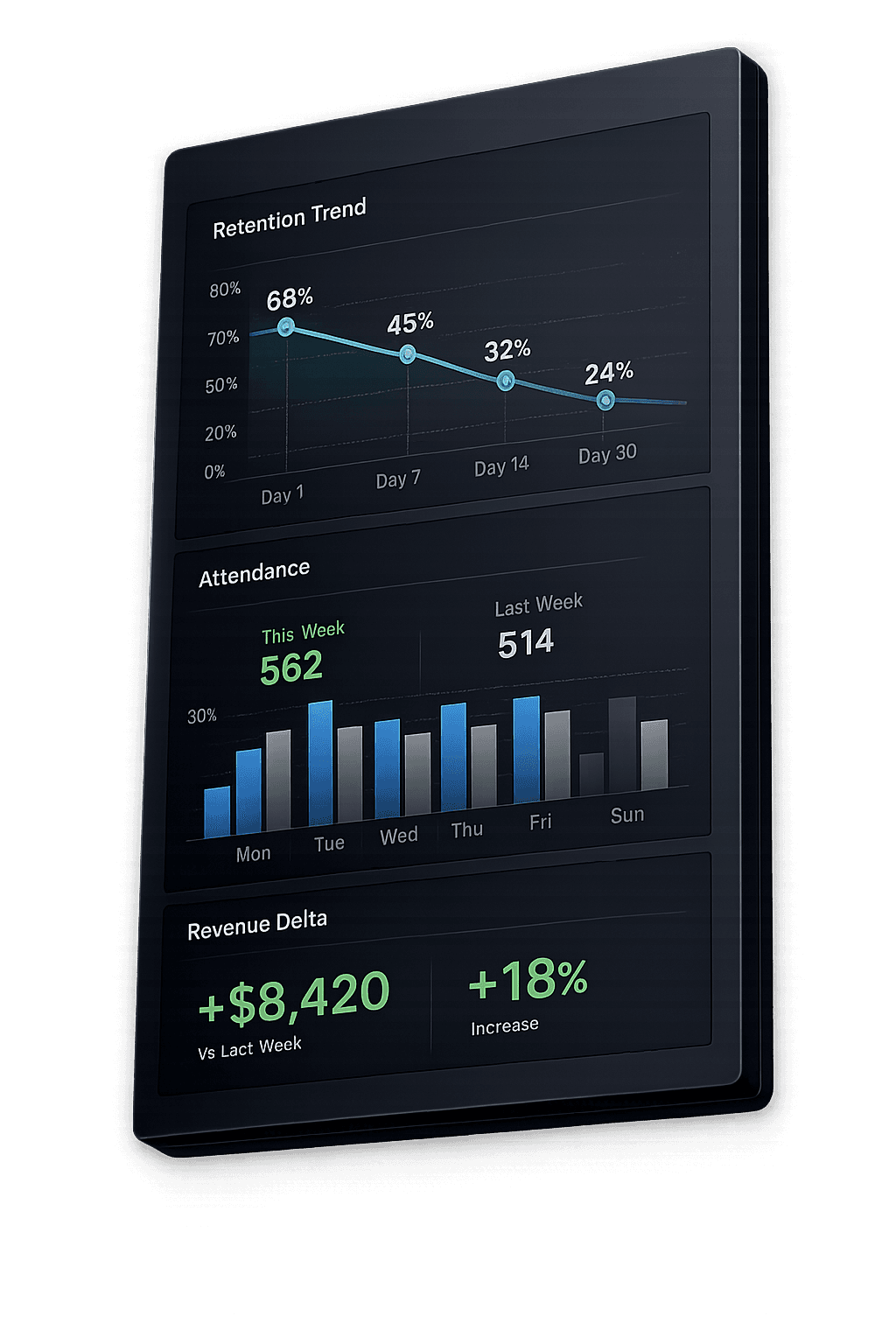
This is a comparison between admin coverage and a broader operating system
Gymdesk is often considered by smaller or growing operators that want straightforward admin coverage. Gymizen is a stronger fit when the team wants that admin layer to grow into a more connected operating system across scheduling, reporting, retention, content, and retail.
That difference matters because the software decision is not only about what works today. It is also about whether the system will still feel coherent once the business becomes more operationally complex.
Gymdesk may fit businesses that want a simpler baseline
For some teams, a simpler operational baseline is the right answer. If the business mainly wants to centralize core admin work and reduce obvious manual overhead, Gymdesk may be enough.
That can be especially true when the business is not yet trying to unify reporting, member risk, content, and more advanced operating workflows.
Gymizen is stronger when the operator wants one connected surface
Gymizen is built for the operator who wants the calendar, member history, reporting, retention work, and commerce layer to stay attached. The advantage is less rework and better visibility when something starts to drift.
That matters as soon as the business has multiple staff members, more scheduling complexity, or a real need to understand trends without rebuilding context across tools.
What to compare in a real trial
A real trial should replay the decisions the business makes each week, not only initial setup. Try reviewing a weak class, an at-risk member, a schedule adjustment, and a retail question in both products.
The stronger system is usually the one that keeps the decision path shorter and the context more visible.
- Weekly schedule review and class-fill analysis
- Member record depth and retention signals
- How reporting connects to the underlying data
- Whether content and retail sit inside the same product surface
- How well the product supports a growing team, not just a solo operator
The better choice depends on how much operating depth you want next
If the business wants a lighter admin baseline, Gymdesk may still fit. If the business wants a more complete operating system that can hold scheduling, reporting, members, content, retail, and retention together as it grows, Gymizen is the stronger fit.
The best comparison is not feature count alone. It is which product feels more coherent once the business starts asking harder operating questions.