

In boutique fitness, you can run a great studio and still lose members—because churn often happens after a single unresolved moment: a coach interaction that felt dismissive, a billing surprise, a waitlist situation that felt unfair, an injury scare, an awkward first class, a hygiene issue, or a “why didn’t anyone notice I disappeared?” gap.
Operators tend to treat these as isolated incidents. Members experience them as evidence: evidence that you’re attentive (or not), fair (or not), safe (or not), and worth the friction of showing up (or not).
A “service-recovery system” is how you make bad moments survivable—without handing out free months, burning out your staff, or letting policy drift turn into revenue leakage. This guide lays out operating judgment, tradeoffs, and decision criteria to build a recovery playbook your team can run consistently.
What service recovery actually is (and why it beats “making it right”)
Service recovery isn’t “be nice and comp something.” It’s a repeatable way to: (1) detect problems early, (2) triage what type of issue it is, (3) respond quickly with the right owner and tone, (4) resolve with consistent guardrails, and (5) learn so the same problem happens less next month.
If you don’t systematize this, you get the worst of all worlds: inconsistent refunds, coach-by-coach responses, front desk anxiety, members who feel ignored, and an owner who becomes the bottleneck for every emotional situation.
Your goal is not “zero complaints.” Your goal is fast, fair, consistent recovery that strengthens trust and reduces repeat failures.
The 5 categories of “bad moments” that cause most churn
Most studios see dozens of micro-issues each month, but the churn-heavy ones tend to cluster into five buckets. Name them explicitly so your team doesn’t improvise a brand-new response every time.
- Billing trust breaks: surprise charges, unclear autopay timing, failed payments handled harshly, refund disagreements, chargebacks.
- Fairness breaks: late-cancel enforcement inconsistency, waitlist outcomes that feel “rigged,” exceptions that look like favoritism.
- Belonging breaks: a coach interaction that felt cold, cliquey vibe, no one learned their name, they felt judged for fitness level.
- Safety/competence breaks: injury concerns, poor scaling guidance, equipment issues, cleanliness issues, overcrowding.
- Reliability breaks: schedule changes, class cancellations, room not ready, doors locked, comms not sent, “I showed up and…” moments.
Notice what’s missing: “they lost motivation.” Motivation drops, sure—but churn often finalizes when a member decides your operation is not trustworthy enough to fight through the friction of life.
Step 1: Detection — build a small set of recovery triggers (not a surveillance program)
Detection is where most operators fail—not because they don’t care, but because the signals are distributed: a DM here, a grumpy comment after class, a front desk conversation, a “membership cancelled” note with no detail. You want a short list of triggers that reliably surface risk.
The minimum viable trigger set (works across yoga, Pilates, CrossFit, martial arts, boxing)
- Attendance drop: any previously consistent member whose visits fall by ~50% over 2–3 weeks.
- Negative sentiment: any message containing “unfair,” “charged,” “rude,” “unsafe,” “embarrassed,” “never coming back,” or “cancel.”
- First-week friction: a new member’s first late cancel/no-show, first waitlist bump, first billing issue, first “didn’t know I had to…” complaint.
- Operational failure: class canceled last minute, doors locked, equipment/cleanliness failure, coach no-show/late.
- Policy exception request: any request for a refund/waiver/transfer is automatically a churn-risk conversation, even if it looks minor.
Tradeoff: more triggers catch more issues, but increase staff load and can feel spammy to members. In practice, the sweet spot is high-signal triggers plus a weekly review where a manager chooses which cases deserve outreach.
Step 2: Triage — decide what type of issue it is (and who owns it)
Your biggest speed boost is separating emotional ownership from operational ownership.
- Front desk owns: quick acknowledgement, facts gathering, documenting the case, and executing standard credits within guardrails.
- Manager owns: exceptions, fairness calls, coach feedback loops, and any situation that could spread to reviews/social.
- Head coach / program lead owns: safety, coaching quality, scaling standards, and training interventions.
- Owner owns: reputational risk, high-dollar refunds, legal/safety escalation, and repeat-pattern fixes (staffing, pricing, capacity).
If you don’t define ownership, two bad outcomes happen: (1) the owner gets pulled into everything, or (2) the member gets a slow, uncertain response because “no one wants to be the one to decide.”
Step 3: Response — the 3-message framework that prevents 80% of damage
You don’t need perfect words. You need a consistent structure that communicates speed, fairness, and control.
Message 1: Acknowledge + timebox
Within the same day (ideally within a few hours), acknowledge receipt and set a timeline. This reduces spiraling and prevents the “they ignored me so I’m canceling” effect.
Template (adapt): “Thanks for flagging this. I’m really sorry that happened. I’m going to look into the details and get back to you by [specific time/day]. If anything urgent comes up before then, reply here and I’ll jump on it.”
Message 2: Clarify the standard + offer a fair fix
Most conflict comes from mismatched expectations. State the standard plainly, then offer a fix that matches the category of failure (not the loudness of the complaint).
- If it’s your fault (reliability/cleanliness/coaching error): fix should be generous and immediate (credit, make-up, or refund depending on context).
- If it’s ambiguous (policy confusion, first-time mistake): fix should be supportive but bounded (one-time waiver + education).
- If it’s clearly not your fault (late cancel with clear notice): fix should be empathetic but consistent (no waiver, but a path forward).
Message 3: Close the loop + prevent recurrence
A resolution without prevention is a slow churn machine. Close the loop with one sentence about what changes next time—whether that’s a coaching note, a policy reminder, or an ops fix.
Template (adapt): “We’ve applied [credit/refund/waiver] today. For next time, the best path is [simple instruction]. Internally, we’re also updating [process] so this doesn’t repeat.”
Step 4: Resolution guardrails — stop “refund roulette” and protect trust
The operator mistake isn’t offering credits. The mistake is offering them inconsistently. Inconsistent exceptions create two kinds of churn:
- Quiet churn from members who feel the studio is unfair, chaotic, or “only helps squeaky wheels.”
- Policy churn where members learn to game the system (and your staff stops enforcing anything because it’s emotionally costly).
Build a “resolution menu” (so staff aren’t negotiating from scratch)
You want a short menu of allowed remedies, each tied to a situation type. Example menu (adjust to your business):
- Make-up class (best for late cancels with high relationship value): preserves pricing integrity while giving relief.
- Account credit (best for operational failures): keeps cash in the business and feels tangible.
- Refund (best for clear studio fault or high-trust billing errors): use sparingly; it’s irreversible and trains expectation.
- Plan adjustment at next billing (best for ongoing mismatch): avoid mid-cycle “special deals” that create hidden tiers.
- Non-monetary recovery (often underestimated): a coach follow-up, technique check, intro-to-equipment session, or “we reserved you a spot” for next class.
Decision rule: the more the complaint is about trust (billing/safety/fairness), the more your fix should emphasize clarity + consistency over “value.” The goal is not to out-comp the issue; it’s to restore confidence.
Set escalation thresholds (so staff feel safe enforcing policy)
Put numbers on what requires manager/owner approval. Otherwise, staff will either over-comp (to end the discomfort) or under-comp (to avoid making a call), and both outcomes cost you.
- Front desk can approve: one-time late cancel waiver for first-time new member; a small credit for a clearly documented studio error; rescheduling within a defined window.
- Manager must approve: any recurring exception; any refund; any policy override that could set precedent; any coach-conduct issue.
- Owner must approve: large refunds; safety incidents with potential liability; repeated pattern affecting many members (e.g., consistent overbooking, coach reliability).
The “Recovery Ladder”: match the fix to the severity (and the member’s relationship stage)
A common trap is treating recovery as purely severity-based. In fitness, the relationship stage matters just as much. A bad first impression is disproportionately costly; a long-time member has more trust but also higher standards.
The ladder (use as a mental model)
- Level 1: Clarity — explain what happened, what the policy is, what to do next. (Surprisingly effective.)
- Level 2: Convenience — move them into a better class time, reserve a spot, simplify the next step.
- Level 3: Care — coach/manager follows up personally, offers a form check, or creates a scaling plan.
- Level 4: Credit — a bounded monetary concession when the studio contributed to the problem.
- Level 5: Refund + reset — when trust is broken and the cleanest path is to unwind the transaction and preserve reputation.
Operator judgment: if you jump straight to Level 4–5 too often, you’ll train members to escalate. If you stay stuck at Level 1 when you actually failed, you’ll train members to quietly quit.
Vertical-specific examples (so this isn’t abstract)
Yoga studio: the “vibe mismatch” complaint
Scenario: A newer student messages: “The teacher felt rude and the class was way too advanced. I felt embarrassed.” This is a belonging break and potentially a safety/competence break if they felt pressured.
- Bad operator move: offer a free month. You didn’t fix the core issue; you just discounted their discomfort.
- Better recovery: apologize, validate, and re-route them into a more appropriate class; optionally offer a make-up class if the studio experience clearly missed the mark; share how you’ll coach teachers on beginner cues.
- Prevention fix: tighten class descriptions and beginner guidance; align teachers on language for modifications and consent.
Pilates studio: equipment + safety perception
Scenario: A client says a reformer felt unstable and they’re worried about injury. Even if nothing happened, this is a safety trust break. Safety issues are “high emotion, high memory.”
- Immediate recovery: same-day acknowledgement, remove equipment from service if needed, offer a rescheduled spot and/or credit if their session was impacted.
- Owner/manager note: brief, confident, non-defensive: what was checked, what was fixed, what will change.
- Prevention fix: preventive maintenance log + pre-class safety check routine; coach language for “stop anytime” and spring settings.
CrossFit gym: coaching tone + scaling conflict
Scenario: A member says, “Coach called me out in front of everyone for scaling and it felt humiliating.” That’s a belonging break. It often precedes “I’m taking a break” churn.
- Recovery: manager or head coach acknowledges impact (not intent), offers a follow-up conversation, and reinforces that scaling is respected.
- Non-monetary fix: invite them to a 10-minute movement check-in before their next class; ensure a friendly coach is on that hour.
- Prevention: coaching standards for public cues vs private corrections; scripting for scaling language.
Martial arts school: belt testing disappointment and fairness
Scenario: A student/parent believes a belt decision was unfair. This is a fairness break—and it spreads through social proof fast.
- Recovery: explain criteria, share one or two concrete skills to improve, offer a defined re-test timeline or coaching plan.
- Avoid: discounts or refunds for testing fees as the primary fix—it implies the criteria are negotiable.
- Prevention: publish testing criteria and progress markers; pre-test check-ins so “surprise failures” are rare.
Boxing gym: late cancel dispute after a stressful week
Scenario: A member is charged a late cancel and comes in hot: “I had an emergency. This is ridiculous.” Often, the policy is correct but the moment is fragile.
- Recovery: acknowledge, briefly restate policy, then choose one of two paths: (a) one-time waiver if they’re a new member or high-value relationship, (b) no waiver but offer a convenient make-up option.
- Prevention: ensure policy reminders happen before it feels punitive; consider “first one is waived” only if you can enforce it consistently.
The two guardrails that prevent recovery from turning into leakage
Guardrail A: Separate “relationship fixes” from “pricing fixes”
A free month is a pricing change. Many problems are relationship problems. When you solve relationship problems with pricing changes, you create hidden tiers (“complainers get better deals”) and erode trust quietly.
Try this operator rule: if the core issue is emotional/safety/fairness, lead with human recovery (care, clarity, competence). Use monetary remedies only when the business actually failed to deliver what was promised.
Guardrail B: Never reward escalation
Members should never learn: “If I threaten a bad review, I get a refund.” That’s not just revenue risk—it’s culture risk. Instead, tie remedies to facts and consistency, and keep your tone calm and respectful.
Consistency is kinder than negotiation. It removes the feeling that they have to fight you to be treated fairly.
Step 5: Learning — turn recoveries into operational upgrades (the compounding advantage)
The hidden ROI of recovery is not the one member you kept. It’s the systems tightening you earn from every incident you document well.
Run a 20-minute weekly “recovery review”
Once a week, review the last 5–15 recovery cases and answer only four questions:
- What happened? (facts, not vibes)
- Which category was it? (billing, fairness, belonging, safety, reliability)
- Did we respond within our standard? (speed + ownership)
- What is the smallest process change that reduces repeats? (a script, a policy reminder, a schedule change, a coaching standard, a maintenance routine)
Tradeoff: if you try to “solve everything,” you’ll do nothing. Commit to one prevention improvement per week. Over a quarter, that’s a different business.
How approval-gated operations fit (without making this a software tutorial)
Service recovery touches money, policies, and brand voice—so it’s one of the clearest places where approval gates protect you. The concept is simple: certain actions (refunds, policy overrides, sensitive messages) should require the right role to sign off.
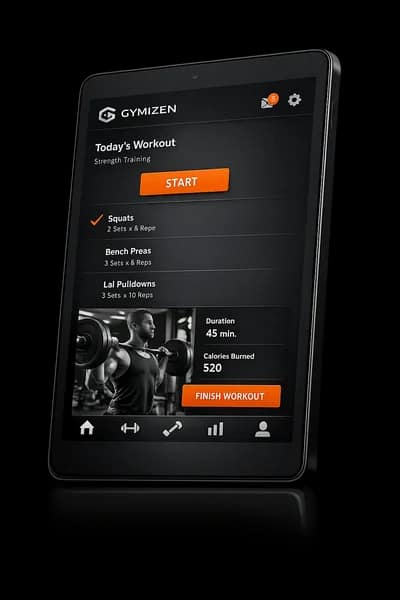
Operators like Gymizen because it supports operator-led control: you can design proactive workflows while preventing accidental giveaways or inconsistent exceptions. But regardless of tool, the operating principle matters most: define what can be done by default, and what requires approval.
What to measure (so you know if recovery is working)
If you only track churn, you’ll miss whether your operation is getting healthier. Add a few recovery-specific metrics to your weekly operator dashboard:
- Time-to-first-response for complaints/issues (same-day is a strong standard).
- Resolution consistency: percent of cases resolved using your approved menu vs improvised deals.
- Repeat-issue rate: same category repeating within 30 days (signals a process problem, not a people problem).
- Post-incident retention: did the member attend again within 7 days? within 14 days?
- Comp leakage: credits/refunds issued as a percent of revenue, tracked monthly with notes on why.
Operator lens: you’re not trying to minimize comp at all costs. You’re trying to ensure comp is purposeful, tied to real failures, and declining over time as prevention improves.
A practical conclusion: the playbook you can implement this week
If your studio feels “pretty good” but churn still hurts, don’t start with another challenge, another discount, or another marketing push. Start with recovery. Here’s what to do in the next 7 days:
- Name your five issue categories (billing, fairness, belonging, safety, reliability) and align the team on what they mean.
- Pick 5 high-signal triggers so issues surface before cancellations do.
- Define ownership: front desk vs manager vs head coach vs owner.
- Write your 3-message response framework and keep it consistent: acknowledge + timebox, clarify + fix, close loop + prevent.
- Create a small resolution menu (make-up, credit, refund, plan change at renewal, non-monetary care) and define approval thresholds.
- Run a weekly recovery review and ship one prevention improvement per week.
When you do this well, your studio becomes the kind of place members don’t leave after one bad week—because they trust you’ll handle it. That trust is one of the most durable retention advantages in boutique fitness.
If you want to go deeper on retention operations and the metrics that surface risk early, use the related resources below.