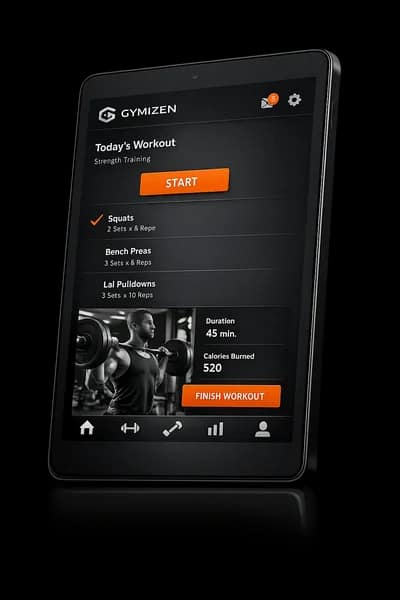


“Go‑live” isn’t a moment. It’s a controlled handoff from your old operating system to a new one—with members in the building, coaches on payroll, and revenue on autopay. The goal of this checklist is simple: launch Gymizen without breaking three things that cause immediate churn and staff burnout: (1) bookings, (2) billing, and (3) exceptions.
This implementation guide is built for boutique operators (CrossFit, yoga, pilates, martial arts, boxing) who are past the “we set it up” phase and entering the “we run the business in it” phase. It assumes you want Gymizen to be operator-led: policies are clear, day-to-day decisions are standardized, and exceptions are routed through approval gates instead of hallway conversations.
What you’ll accomplish in 7 days
- Cutover plan that defines the exact “source of truth” date/time for bookings, member status, and billing.
- Member-visible schedule published with capacities, booking windows, and waitlists behaving predictably.
- Billing readiness: autopays, invoices, and failed-payment handling are tested (with defined exception approvals).
- Staff readiness: front desk and coaches know what to do when something is “weird” (and where it goes).
- Launch comms: members understand what’s changing, what they need to do, and what support looks like.
- QA pack: a repeatable set of tests you can rerun before and after go-live.
- Definition of success you can verify inside Gymizen during week one.
Prerequisites (don’t skip these)
If any prerequisite is missing, your launch becomes a support queue. You can still go live, but you’ll be choosing “fire drill” over “controlled rollout.”
- Owner decision: a single go‑live date on the calendar (not “sometime next week”).
- Clean member dataset: active members, paused members, and prospects are correctly represented (or at minimum, you know what won’t be perfect).
- Policies written down: late cancel, no-show, booking window, waitlist behavior, and holds/reactivations. (Even if you plan to refine later.)
- Staff roles defined: who can approve exceptions, who can change billing, who can edit schedule, who can issue credits.
- Time blocked: at least 60–90 minutes/day of owner/manager time during launch week for QA + approvals.
Rule of thumb: If you can’t explain your exception policy in one sentence at the front desk, it isn’t a policy yet—it’s a negotiation.
Your launch team (role-by-role responsibilities)
Gymizen launches cleanly when every task has an owner and every “weird case” has a route. Use these responsibilities as defaults; adjust for your team size.
Owner (or GM): policy owner + final approver
- Locks the go‑live date/time and communicates it internally.
- Approves the final versions of late cancel/no-show/hold policies.
- Defines approval gates (who can override what) and commits to using them.
- Owns the “rollback plan” decision (if needed).
Ops Manager: QA lead + launch conductor
- Runs the QA pack daily during the final 72 hours.
- Validates schedule publishing, capacities, and booking rules.
- Trains front desk on day-of workflows and escalation routes.
- Monitors the exception/approval queue during launch week.
Front Desk Lead: member experience + scripts
- Owns the “what to say” scripts for booking/billing confusion.
- Owns the first-line troubleshooting checklist (before escalating).
- Flags recurring issues so policies/config can be tightened.
Head Coach (or Program Lead): schedule reality check
- Validates class names, coach assignments, and capacity assumptions.
- Confirms attendance workflow expectations (check-in, late arrivals).
- Helps coaches stick to the new workflow (no side-channel exceptions).
Recommended defaults (so your first week is calm)
These defaults are designed to reduce “special cases” in week one. You can loosen later once your team is fluent. The fastest way to lose trust during cutover is to launch with maximum flexibility and minimum clarity.
- Booking window: open bookings 7 days out (not 21+) during week one.
- Waitlist: enable, but keep auto-promotion rules consistent; avoid manual “pull from waitlist” exceptions unless approved.
- Late cancel: define a single cutoff (e.g., 8–12 hours) and stick to it for week one.
- No-show handling: treat as a distinct outcome from late cancel; make it visible in your attendance reporting.
- Approval gates: require approval for comp classes, fee waivers, and policy overrides during launch week.
- Staff permissions: smallest set that allows the desk to serve members without editing financial history.
The 7‑day go-live cutover plan
This timeline assumes your “Day 1” is the day members start booking and your staff starts checking in in Gymizen. Adjust days to match your calendar, but keep the order. Each day includes: Setup, QA checks, and owner decisions.
Day -7: Lock your cutover rules (source of truth)
Before you touch more configuration, decide what “cutover” means. Otherwise you’ll run two systems at once—without admitting it.
- Set the cutover timestamp: e.g., “Bookings in Gymizen starting Monday at 6:00am local time.”
- Define what freezes: list the old system actions you’ll stop (new memberships, holds, schedule edits, comp credits).
- Define what can still happen in the old system: ideally only passive reference for history.
- Choose your billing cutover approach: (a) immediate billing in Gymizen, or (b) stagger billing after bookings/check-in stabilize.
- Choose your exception escalation route: front desk → ops manager → owner (with approval gates).
- QA checks: write your “Day 1 success criteria” (see the success section below) so you can measure, not guess.
Day -6: Confirm member access + identities (the duplicate trap)
Most go-live pain comes from identity confusion: duplicates, mismatched emails, family accounts, or a member who “can’t find their account.” Fixing identity after app rollout is a morale killer.
- Pick 20 real members across your segments (unlimited, pack, paused, trial, family, staff).
- Verify each has a single profile, correct email/phone, correct status, and correct home location (if multi-location).
- Confirm membership entitlements behave as expected (can they book what they should?).
- Set a standard support path for account issues: desk verifies email → resets access → escalates only if duplicate/merge needed.
- QA checks: do a “new password / login” test with 3 members who are not staff.
Day -5: Publish the schedule (but treat it like production)
Your schedule is your promise. During cutover week, it should be boring: consistent naming, predictable capacities, minimal last-minute edits. That’s how you build trust in the new system fast.
- Standardize class naming (avoid “6am,” “6:00,” and “0600” variants).
- Set capacities for each class type and validate against room reality.
- Define booking rules per class type (booking window, cancellation cutoff, waitlist enabled).
- Assign coaches where appropriate and confirm coach visibility expectations.
- Publish at least the next 10–14 days so members don’t hit “empty calendar.”
- QA checks: from a test member view, verify they can (a) see the schedule, (b) book, (c) cancel, and (d) join a waitlist.
- Owner decision: confirm whether any “VIP exceptions” are allowed during week one (recommendation: only with approval).
Day -4: Configure approval gates for launch week (your chaos filter)
Launch week generates exceptions: “I got stuck in traffic,” “I’m traveling,” “my card changed,” “can you squeeze me in.” The win is not eliminating exceptions—it’s routing them so the desk isn’t making policy on the fly.
- List the top 10 exceptions you expect (late cancel waiver, no-show waiver, comp class, manual booking, retroactive hold, billing date change, refund/credit, plan downgrade, failed payment extension, staff comp for a friend).
- Assign each exception a default outcome and an approver (desk cannot approve most).
- Decide what gets handled same-day vs. within 24 hours.
- Write the front desk “member-facing script” for each (one sentence each).
- Create a single internal channel for escalations (not text messages to the owner).
Launch-week principle: Speed for the member, control for the business. Approval gates let you be responsive without being porous.
Day -3: Billing readiness (test with real scenarios, not assumptions)
Billing is where churn becomes permanent. The goal isn’t “we turned billing on.” It’s: we can predict outcomes—successful charges, failures, notifications, grace, and escalation—without improvising at the desk.
- Define your billing cutover sequence: what date new charges begin in Gymizen.
- Choose a small set of “billing QA members” (at least 5) and confirm next bill date, plan price, and payment method status.
- Run a controlled test: a successful payment, a failed payment, and a manual payment (if applicable).
- Confirm your failed-payment workflow responsibilities: who reaches out, what the grace window is, and what requires approval.
- Confirm receipts/notifications are consistent with what your brand promises (tone, sender, timing).
- QA checks: can the front desk see payment status clearly without editing billing history?
- Common mistake to avoid: letting front desk “fix” billing by issuing credits/refunds without a gate. That turns into policy drift fast.
Day -2: Staff training (minimum viable fluency)
Training should be role-based, scenario-based, and short. Your goal is not feature mastery. It’s consistent execution under pressure.
Front desk training (60–90 minutes)
- Bookings: book/cancel, move a member, waitlist behavior, what to do when a class is full.
- Check-in: check in a member, handle “not on roster,” handle late arrival, mark no-show (if your workflow supports it).
- Member record hygiene: where to see status, plan, notes, and what not to edit.
- Escalations: how to send an exception to approval (and what info must be included).
- Scripts: practice 5 real member conversations (late cancel waiver request, app login help, billing question, waitlist confusion, “I’m new—what do I do?”).
Coach training (20–30 minutes in a huddle)
- Where to view their roster and class details.
- What “checked in” means operationally and why it matters to retention reporting.
- How to handle a member who says “I booked” but isn’t on the roster (coach doesn’t override; desk handles via process).
- What to do if capacity is exceeded (coach escalates; doesn’t create a new rule on the fly).
Day -1: Member communications + final QA pack
Members don’t need your software story. They need clarity: what changes, what they need to do, and how support works. Over-communicate for 48 hours; it reduces 2 weeks of desk friction.
Member message checklist (send 24–36 hours before go-live)
- What’s changing: “Bookings and account management will now be in Gymizen.”
- What members must do: “Log in using the email you used at the studio. Reset password if needed.”
- When: provide an exact date/time window for cutover.
- What won’t change: class times, coaching staff, your policies (unless they are changing—then say so plainly).
- Where to get help: a single support path (front desk in person + one email inbox).
- What to do if they can’t log in: “Stop by 10 minutes early and we’ll get you set up.”
Final QA pack (run it end-to-end)
- Schedule: next 14 days visible; capacities correct; coach assignments reasonable.
- Member access: 5 members can log in successfully (not staff).
- Bookings: book/cancel/waitlist for each main membership type.
- Attendance: check-in works; staff understands what to do when someone is missing.
- Billing: test scenarios completed; approver knows where billing exceptions go.
- Permissions: front desk can do their job but cannot silently override everything.
Day 0 / Go‑Live: Run the day like a launch (not like a normal day)
Go-live day should feel slightly overstaffed and slightly overprepared. That’s the point. You’re buying down risk and protecting retention.
- Front desk opens 30 minutes early (even if doors don’t) to verify schedule + roster visibility.
- Assign one “floor fixer” (ops manager or GM) to handle escalations so the desk can keep the line moving.
- Use approval gates for every policy override. If you bypass the gate on day one, you teach the team that gates are optional.
- Capture issues in one place (a running list). Don’t rely on memory at close.
- End-of-day 15-minute debrief: top 3 issues, what config/policy/training change fixes each, and who owns it.
The “rollback plan” (keep it simple, keep it real)
Most operators avoid talking about rollback because it feels like doubt. It’s not. It’s professionalism. A rollback plan doesn’t mean you’ll use it—it means you won’t panic if something unexpected happens.
- Define a rollback threshold: e.g., “If members cannot book/check in for more than X hours, we temporarily take bookings at the desk while we fix the root cause.”
- Define a rollback scope: booking-only workaround vs. billing pause vs. full stop.
- Define who decides: owner/GM only (not ad hoc).
- Define member messaging: one short message template: “We’re updating systems; you can book at the desk today; nothing else changes.”
Common mistakes (and how to prevent them)
Mistake #1: Running two sources of truth for “just a week”
If staff can still “fix it in the old system,” they will. It feels helpful in the moment and destroys confidence long-term. Prevention: set a cutover timestamp and enforce it—exceptions route through approval gates, not alternate systems.
Mistake #2: Too many permissions to “make it easier”
Over-permissioning turns training into improvisation and approvals into afterthoughts. Prevention: give front desk what they need for speed; keep financial and policy overrides gated.
Mistake #3: Launching with a complicated schedule change
If you change class times, coaches, and software all at once, you won’t know what caused complaints. Prevention: keep schedule stable for 2 weeks around cutover unless you have a strong reason not to.
Mistake #4: Treating member confusion as “user error”
Confusion is feedback. If 10 members ask the same thing, it’s your process, comms, or configuration—not their competence. Prevention: write scripts, reduce steps, and standardize outcomes through approvals.
What success should look like in Gymizen (week 1)
Success is not “no issues.” Success is predictable operations: the team knows what to do, members regain confidence quickly, and exceptions are controlled instead of contagious. Use these as week-one checks.
- Bookings are stable: members can book and cancel without staff intervention for standard scenarios.
- Attendance is trustworthy: check-ins match reality closely enough that coaches believe the roster and owners believe the reporting.
- Exception volume is visible: you can see how many overrides/waivers happened and who approved them.
- Billing questions drop daily: the desk is not spending all shift troubleshooting payment status.
- Staff behavior aligns: coaches are not making side promises; front desk routes exceptions through approvals; owner isn’t ambushed between classes.
After go-live: your next 14 days (so rollout turns into retention ops)
Once week one is stable, don’t immediately expand complexity. Tighten what you learned, then layer in deeper automation and operating cadence.
- Week 2: refine your approval gates (remove unnecessary ones; strengthen the leaky ones).
- Week 2: standardize exception reasons and outcomes so reporting reflects reality.
- Week 3: introduce a weekly operating rhythm: review attendance variance, churn risk, and exception volume with managers.
- Week 3: document the front desk “playbook” as a living checklist so training new staff is easier.
Conclusion: launch isn’t the finish line—it’s the first clean week
A good Gymizen cutover protects what you’ve already earned: member trust, staff energy, and predictable revenue. Keep the first week intentionally strict—clear policies, tight permissions, and approval-gated exceptions. Then, once your team is fluent, you can safely add flexibility without turning your operation into a constant “can you make an exception?” loop.
If you want, you can turn this guide into an internal one-page launch doc: copy the 7-day timeline, assign owners per task, and schedule the Day 0 debrief now—before you’re tired.