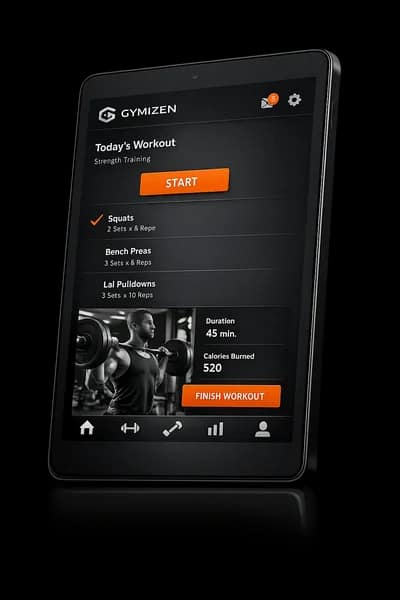


Personal training (and other 1:1 services like skill sessions, assessments, or intro consults) is where boutique fitness ops usually break first: bookings happen in DMs, reschedules are negotiated case‑by‑case, packages get tracked in someone’s notes app, and coaches end up running “unpaid makeups” that quietly leak revenue.
This rollout playbook shows how to operationalize PT and appointments in Gymizen so it’s bookable, billable, and auditable—with approval‑gated exceptions when you truly need them. You’ll finish with (1) clean service products, (2) coach calendars that reflect reality, (3) member booking rules that prevent churn‑causing friction, and (4) an operating rhythm that keeps everyone aligned.
Who this is for (and what this guide is not)
- Owners / GMs rolling out PT for a CrossFit gym, yoga studio, pilates studio, martial arts school, or boxing gym—and you want fewer exceptions and cleaner retention outcomes.
- Ops managers who need a repeatable workflow (not “ask Sarah, she knows”).
- Front desk leads who handle schedule changes and need guardrails.
- Head coaches who need predictable calendars and fair rules.
- Not a pricing strategy article or a general “sell more PT” post. This is a practical implementation walkthrough inside Gymizen workflows.
The outcome you’re building (definition of “done”)
- Members can self‑book 1:1 sessions inside the member app with clear availability and rules.
- Packages / credits are created, sold, and consumed consistently (no “free sessions” due to tracking gaps).
- Reschedules / late cancels follow default policies, with approval gates for exceptions.
- Front desk can handle 80–90% of changes without pinging owners—because the workflow tells them what’s allowed.
- Coaches see a clean calendar, get reliable pay inputs, and have a single source of truth for their schedule.
- Managers review an exception queue weekly and can spot revenue leakage patterns (e.g., repeated “medical” reschedules).
Prerequisites (do this before Day 1)
PT rollout goes smoothly when your workspace and billing foundation already exist. If those are still in flux, pause and stabilize the basics first—otherwise you’ll rebuild products and rules twice.
- Workspace basics: locations, time zone, business hours, notification defaults, and approval gate roles defined.
- Staff accounts created for owners, managers, front desk, and coaches (even if some are “view‑only” for now).
- Billing configured: payment processor connected, taxes (if applicable), receipts, refund controls, and autopay settings aligned with your policies.
- Member data ready: at minimum, active members + contact details + membership status are accurate.
- Decisions made (write these down): session length(s), booking window, cancel window, reschedule limits, package expiration, and who can approve exceptions.
Implementation principle: Don’t start with edge cases. Start with one clean “default PT session” workflow, then expand to specialties (assessment, intro consult, rehab, etc.).
Recommended defaults (so you can launch without endless debate)
Every gym has its own policies—but these defaults tend to reduce churn and reduce exceptions. Adjust if your brand promise requires it (e.g., high‑touch concierge studios).
- Session duration: 55 minutes (gives a 5‑minute buffer by default). Offer 25 minutes only if you have a clear use case.
- Booking window: members can book 21 days ahead; staff can book 60 days ahead.
- Cancel/reschedule window: 12 hours (24 hours for premium/limited‑availability coaches).
- Late cancel consequence: session credit is consumed (or a late-cancel fee if you run both credits + fees).
- No-show consequence: credit consumed + member is restricted from self‑booking for 7 days (approval gate to remove restriction).
- Package expiration: 6 months (unless your local regulations require otherwise).
- Reschedule limit: 2 reschedules per package per month without approval; additional reschedules require manager approval.
- Approvals: exceptions require manager approval; refunds/credit reinstatements require owner approval.
Roles and responsibilities (who does what during rollout)
Appointment workflows fail when responsibilities are vague. Assign a single accountable owner for each area—even if one person wears multiple hats.
- Owner/GM (Accountable): approves policies, sets approval gates, signs off on final QA, reviews first 2 weeks of exception patterns.
- Ops Manager (Responsible): builds services/packages, configures booking rules, sets up reports/exception views, runs training sessions.
- Front Desk Lead (Responsible): tests booking flows, documents “what to do when…” scripts, owns member comms and day‑to‑day changes.
- Head Coach (Consulted): defines coach availability norms, buffer times, and on‑floor constraints; ensures coach adoption.
- Coaches (Informed → Responsible): maintain availability, confirm sessions, follow cancellation standards, and stop scheduling off‑platform.
The 10‑day rollout timeline (overview)
- Days 1–2: Build service catalog + packages (products), set pricing/credits/expiration.
- Days 3–4: Configure coach calendars + availability standards (and buffer rules).
- Days 5–6: Configure booking rules, cancellations, approval gates, and member restrictions.
- Days 7–8: QA testing (member app + staff flows) and exception simulations.
- Day 9: Staff training (front desk + coaches) with live drills.
- Day 10: Soft launch + first-week monitoring cadence.
Days 1–2: Build your PT service catalog + packages (keep it simple)
Start with a small number of services that map to how your team actually coaches. Too many options creates member confusion and more admin work.
Step 1 — Define service “types” (what shows up to book)
- PT 55 (default): standard 55‑minute 1:1 session.
- PT 25 (optional): short technique tune‑up (only if you’ll actually sell it).
- Assessment / Goal Review 55 (optional): for new PT clients or quarterly check‑ins.
- Intro Consult 25 (optional): a first touch that leads into packages (often free or low‑cost).
For each service, decide: duration, who can deliver it, where it can happen (location/room), and how it’s paid (drop-in vs credit/package).
Step 2 — Create package products (the revenue foundation)
Most boutiques should offer 2–3 packages, not eight. Your goal is consistent behavior, not a menu.
- Single Session: 1 credit; higher per-session price.
- 5-Pack: 5 credits; modest discount; expires in 3–6 months.
- 10-Pack: 10 credits; best value; expires in 6 months.
- Monthly PT (optional): recurring monthly credits (e.g., 4/month). Keep rules strict to prevent rollover confusion.
Decide how credits behave: Are they interchangeable across services (PT 55 vs Assessment 55), or service‑specific? Service‑specific credits reduce abuse; interchangeable credits reduce admin friction. If you’re unsure, start service‑specific for your first launch and add interchangeability only when you trust your exception controls.
Step 3 — Set package rules that reduce churn-causing surprises
- Expiration clarity: show the expiration date in confirmation/receipts (and in staff views).
- Transferability: default to non-transferable. If you allow transfers, require manager approval.
- Refund posture: prefer credit reinstatement (approval-gated) over refunds when operationally possible.
Common mistake: launching PT booking before packages exist. That forces staff to “book now, bill later,” which is where leakage begins.
Days 3–4: Configure coach calendars and availability (reality-based scheduling)
Your PT experience is only as good as your real availability. If calendars are fantasy, members stop trusting the app and go back to texting coaches.
Step 1 — Choose an availability model
- Fixed blocks (recommended): coaches open specific PT windows (e.g., Mon/Wed 6–9am, Tue/Thu 4–7pm). Easy for members and stable for coaches.
- Flexible availability: coaches toggle availability weekly. Higher admin load; only use if your team truly needs it.
Step 2 — Add buffers and capacity limits (protect the day)
A 60‑minute PT appointment that starts at :00 and ends at :55 is a hidden retention lever: it reduces rushed transitions, late starts, and negative member moments that cause churn.
- Default buffer: 5 minutes between sessions.
- Max sessions per block: cap consecutive PT sessions (e.g., no more than 3 back‑to‑back) unless coach opts in.
- Room/equipment constraints: if you have limited space (one reformer room, one striking area), treat it as a capacity resource and prevent double-booking.
Step 3 — Standardize coach naming and service eligibility
Members should know who they’re booking with and what that coach offers. Align on one naming format (e.g., “Coach Maya R.”) and define which coaches are eligible for each service (PT 55, assessment, consult).
Common mistake: allowing every coach to appear bookable for every PT service “just in case.” That increases reschedules and exceptions when the wrong coach gets booked.
Days 5–6: Booking rules, cancellation policies, and approval gates (where ops gets clean)
This is the heart of the rollout. Your rules should do two things at once: protect the member experience (predictable, fair policies) and protect the business (prevent leakage and constant exceptions).
Step 1 — Define who can book, change, and override
- Members: can self‑book within window; can cancel/reschedule within policy window; cannot override penalties.
- Front desk: can book on behalf of a member; can reschedule within policy window; can request exceptions (but not approve them).
- Managers: can approve exceptions (credit reinstatement, policy override) within defined guardrails.
- Owners: can approve refunds, retroactive edits, and “special case” adjustments.
Step 2 — Configure cancellation and no-show outcomes
Choose one primary consequence and stick to it. Consistency is what reduces angry member escalations.
- Late cancel: consume credit by default.
- No-show: consume credit + optional temporary self‑booking restriction.
- Staff-canceled sessions: do not consume credit; prompt a rebook recommendation.
Step 3 — Add approval gates for exceptions (and define what counts as an exception)
If “exception” is subjective, your front desk will end up granting exceptions to avoid conflict. Make it objective and approval‑gated.
- Allowed without approval: reschedule/cancel inside window; staff booking changes inside window.
- Requires manager approval: reinstate a consumed credit; waive a late cancel; remove self‑booking restriction early; transfer credits.
- Requires owner approval: refunds; retroactive edits to close-out periods; repeated exceptions for the same member (pattern risk).
Tip: Treat approval gates as a queue, not a conversation. Requests should have a reason code and a short note so managers can approve/deny quickly and consistently.
Step 4 — Configure “member friction” intentionally (not accidentally)
Too much friction kills bookings; too little friction creates chaos. Use friction only where it prevents real operational pain.
- Require a payment method on file before booking PT (reduces payment chasing).
- Require an active package/credit to confirm booking (avoid “tentative” sessions).
- Limit self-booking if member has repeated no-shows (with an approval-gated removal).
Days 7–8: QA testing (run it like a launch, not a hope)
QA is where you prevent the first-week support flood. Run tests using a staff test member account and at least one real coach calendar.
Member app QA checklist
- Member can see PT services and available coaches (no “empty calendar” surprise).
- Member can purchase a package and immediately use credits to book.
- Booking confirmation message is clear about time, coach, location, and cancellation window.
- Member cannot book without credits/payment method (if configured).
- Reschedule inside the window works; reschedule outside the window triggers the correct restriction/penalty path.
Staff workflow QA checklist (front desk + manager)
- Front desk can book on behalf of a member and apply the correct package/credit.
- Late cancel consumes credit automatically (or triggers fee) and logs the event.
- Exception request is created with reason + note, and routes to the correct approver.
- Manager can approve/deny and the outcome is reflected in member credit balance.
- Owner-only actions (refunds/retro edits) are blocked for managers/front desk.
Coach QA checklist
- Coach sees schedule with correct member names and session types.
- Coach receives the right notifications (new booking, cancellation, reschedule).
- Coach cannot “edit history” or waive penalties unless explicitly permitted.
- Coach availability rules prevent double-booking and reflect their real constraints.
QA simulation to run: member late-cancels, asks front desk for a “one-time waive,” front desk submits exception request, manager approves with reason code, credit is reinstated, and the event is logged for weekly review.
Day 9: Staff training (role-by-role drills that actually stick)
Training should be short, practical, and scenario-based. If you only “show features,” your team will revert to old behavior the first time a member pushes back.
Front desk training (60 minutes)
- Booking on behalf of member: practice 3 bookings (new client, returning client, package expired).
- Reschedule inside policy: do it quickly and confirm notification went out.
- Late cancel request script: practice calm language and the “approval gate” handoff.
- Exception request standards: reason code + short note, no screenshots, no Slack DMs to managers.
- Escalation thresholds: what goes to manager vs owner.
Coach training (45 minutes)
- Calendar hygiene: availability blocks, when to update, and what not to do (no side-channel scheduling).
- Session readiness: how to confirm the member’s session type and goals.
- Cancellation posture: coaches don’t waive penalties; they route member requests to the approved process.
- Day-of changes: what to do if coach is sick or delayed (and how the front desk handles it).
Manager training (30 minutes)
- Approving exceptions: approve/deny quickly; use consistent reason codes; avoid “custom policy” in DMs.
- Pattern review: identify repeat exception requesters (members or staff) and intervene with coaching or policy clarification.
- Weekly metric check: bookings, late cancels/no-shows, credit reinstatements, refunds.
Training deliverable: a one-page internal SOP: “PT booking + changes: what to do in Gymizen,” owned by the front desk lead and reviewed quarterly.
Day 10: Soft launch (controlled exposure, fast feedback)
Soft launch means you deliberately start with a subset of members and coaches for one week, then expand. This prevents you from discovering policy gaps at full volume.
- Choose 1–2 coaches with stable availability and good communication habits.
- Choose 15–30 members who are already engaged and likely to give constructive feedback.
- Enable member self‑booking for those members (or encourage booking via the app).
- Hold a 15‑minute daily check for the first 5 days: what exceptions came in, what questions repeated, what felt confusing.
First 2 weeks operating cadence (so the workflow stays clean)
A rollout is only “done” when it’s operationalized. Here’s a simple cadence that prevents drift back into off-platform scheduling.
Daily (front desk, 10 minutes)
- Review today’s PT appointments and confirm any “at risk” sessions (new member, past no-show, unclear credit status).
- Check for same-day cancellations and ensure outcomes were applied correctly.
- Submit exception requests with complete notes—no side-channel asks.
Weekly (manager, 30 minutes)
- Review exception approvals: count, reasons, and repeat patterns.
- Audit credit reinstatements vs late cancels/no-shows (watch leakage).
- Coach availability check: identify coaches whose blocks are empty (supply issue) vs always full (capacity issue).
Biweekly (owner/GM + manager + head coach, 45 minutes)
- Policy review: are your windows too strict (causing churn friction) or too loose (causing chaos)?
- Offer health: packages sold, sessions delivered, average lead time to next booking, and coach utilization.
- Decide 1 change max per period (don’t churn policies weekly).
Common mistakes (and how to prevent them)
- Mistake: letting coaches schedule sessions “off the books.” Prevention: pay and performance tracking only count sessions booked in Gymizen; reinforce in coach training.
- Mistake: exceptions handled in text/DMs. Prevention: all exceptions become approval-gated requests with reason codes; managers stop responding to side-channel requests.
- Mistake: too many service options at launch. Prevention: start with PT 55 + one package tier set; expand only after two clean weeks.
- Mistake: unclear expiration rules leading to member conflict. Prevention: show expiration in confirmations and have a single script for handling expiring/expired credits.
- Mistake: front desk has broad permissions “to be helpful.” Prevention: front desk can request exceptions, not approve them; refunds remain owner-only.
What success looks like in Gymizen (measurable, operational signals)
After 30 days, you should be able to say “PT is running cleanly” based on observable signals—not gut feel.
- Adoption: 90%+ of PT sessions are booked through Gymizen (not side-channel).
- Exception rate: exception approvals trend down week-over-week after week 2 (initial ramp is normal).
- Policy clarity: front desk reports fewer “can you make an exception?” conversations because the default answer is clear and consistent.
- Revenue integrity: late cancels/no-shows reliably consume credits (or apply fees) with only rare reinstatements.
- Coach experience: coaches report fewer surprises, fewer last-minute schedule changes, and clearer expectations.
- Member experience: fewer negative moments around booking (confusion, double-booking, unclear rules)—which shows up as fewer complaints and fewer churn-risk signals.
Conclusion: PT workflows should be high-touch, not high-chaos
Personal training is one of the most retention-positive services you can run—but only if the ops are predictable. When PT scheduling, packages, and exceptions are handled with approval gates inside Gymizen, your team stops improvising and starts operating. That means fewer leaks, fewer member conflicts, and a calmer experience for everyone.
If you want to extend this rollout next, the most common “phase 2” upgrades are: (1) tightening your exception reason codes, (2) adding a weekly reporting cadence, and (3) aligning member app comms so members understand the rules before they hit them.