

If you’ve ever looked at churn and thought, “We need a better promo,” you’re not alone. But in most boutiques, the biggest lever isn’t acquisition—it’s what happens after someone signs up. The first 30 days is where members decide (quietly) whether your business becomes part of their weekly identity or just a short-lived attempt at “getting back into it.”
This isn’t a software tutorial. It’s an operator guide: the operating judgments, tradeoffs, and specific behaviors you can design into your first‑30‑days experience so new members become regulars—without bribing them with discounts or burning out your staff with one-off exceptions.
Why the first 30 days decides retention (and why “great workouts” isn’t enough)
A new member’s early experience is fragile for three reasons:
- They haven’t built a habit loop yet. Motivation got them to buy. Habit is what keeps them paying.
- They’re still evaluating “fit.” Not just workout fit—schedule fit, social fit, coaching style fit, and “can I do this?” fit.
- They’re hyper-sensitive to friction. Confusing class types, unclear policies, awkward check-in, inconsistent coaching, surprise fees, or “I don’t know anyone” moments.
Operators often over-index on the visible stuff (branding, facility upgrades, social media). Meanwhile, the invisible operating system—how a new member gets guided into a weekly routine—decides whether they hit a stable cadence or drift into “I should go more” guilt until cancellation.
Retention is often the accumulation of small, consistent wins in the first month: clarity, confidence, and connection—delivered on time, every time.
The operator’s north star: convert “new” into “known”
The fastest path to early churn prevention is simple to say and hard to run: make every new member feel known before their enthusiasm fades.
“Known” has three components:
- Known by the team: name recognition, context (“new to boxing,” “bad shoulder,” “nights only”), and a plan.
- Known in the room: at least one friendly connection with staff and one with another member.
- Known to themselves: they understand what “success” looks like in your studio and believe they can get there.
Your first‑30‑days retention engine is the set of repeatable touchpoints and guardrails that reliably create those three outcomes—without relying on heroic coaches or founders who remember everyone.
The 30‑day retention engine (overview): 4 systems, not 30 tactics
If you want this to run at scale, think in systems. A strong first‑month operator playbook is usually four systems working together:
- Habit system: an attendance target and cadence that turns “trying” into routine.
- Confidence system: an on-ramp path where members know what to take next and feel capable.
- Connection system: intentional moments that build belonging (not forced community).
- Friction-control system: policies and approvals that keep exceptions from eating your ops.
Let’s break each down with decision criteria and examples across yoga, pilates, CrossFit, martial arts, and boxing.
System 1: Habit — design an attendance target that’s realistic and measurable
Most operators have an implicit hope: “If they love it, they’ll come.” The habit system makes the early goal explicit—for both the member and the team.
Choose a 30-day attendance target (and match it to your model)
Pick a target that creates momentum but doesn’t trigger injury, overwhelm, or schedule collapse. The right number depends on intensity and skill complexity:
- Yoga: often thrives on frequency. A common early target is 8–12 classes in 30 days (2–3x/week) for habit and flexibility progress.
- Pilates (reformer-heavy): intensity + limited capacity means a sustainable target might be 6–10 sessions in 30 days, with a clear progression for beginners.
- CrossFit / strength conditioning: for many beginners, 8–12 coached sessions in 30 days is enough for skill familiarity and soreness management.
- Martial arts: attendance and skill progression are linked. Consider 8–16 classes in 30 days depending on class length and curriculum pacing.
- Boxing: new members often overdo it week 1 then disappear. A target like 10–14 sessions in 30 days can work if you actively manage recovery and modifications.
Your target should be stated as a simple sentence your staff can repeat: “Your goal in your first month is 10 visits—think 2–3 per week. If we can get you there, you’ll feel the difference.”
Turn the target into scheduling behavior (not just motivation)
The operational move isn’t “remind them to come.” It’s to convert a target into a default weekly pattern. For example:
- Two anchors + one flex: “Tues/Thurs at 6pm are your anchors; Saturday morning is your flex.”
- Plan for schedule conflict: “If you miss Tuesday, your make-up is Wednesday lunch.”
- Reduce decision fatigue: pre-select class types (e.g., 2 beginner-friendly formats + 1 optional specialty).
Tradeoff to acknowledge: the more you push frequent attendance, the more you must control experience quality (crowding, waitlists, coaching attention). Habit targets fail when capacity realities make members feel like they’re fighting to get in.
System 2: Confidence — build an on-ramp path that reduces confusion and protects safety
Early churn often looks like “they just stopped showing up.” Underneath, it’s frequently a confidence collapse: too hard, too confusing, too embarrassing, too many options, or no clear sense of progress.
The path should answer three questions for a new member
- What should I take next? (Specific class types, not “whatever you want.”)
- What’s normal to struggle with? (Soreness, coordination, breath control, technique, learning the language.)
- How will I know I’m improving? (A simple milestone by day 30.)
Examples of confidence paths by vertical (with operator tradeoffs)
Yoga: If your schedule is a mix of Vinyasa, heated flow, slow flow, yin, sculpt, and specialty workshops, a new member can accidentally choose the most discouraging option. A confidence path might be: 2 slow flows + 1 beginner Vinyasa each week for two weeks, then add one heated or strength-oriented class. The tradeoff is you must message this without making other formats feel “advanced only.”
Pilates: Many studios rely on strict leveling for safety and equipment flow. Your confidence system should make leveling feel like care, not gatekeeping. The tradeoff: if you allow frequent “one-off” exceptions into higher-level sessions, you’ll create coach stress and uneven experiences—often felt most by the new member who ends up lost.
CrossFit: A strong on-ramp is not only about movements; it’s about reducing intimidation. New members need permission to scale and a clear language: “Today’s win is consistent mechanics, not heavier weight.” Tradeoff: if classes are programmed without enough scalable options, coaches end up improvising every hour, which breaks consistency.
Martial arts: Confidence comes from knowing what to do when you don’t know what to do—etiquette, partner work, basic stance, and how curriculum progresses. Tradeoff: a fast-track beginner program can increase conversions but may frustrate long-term students if it disrupts class flow.
Boxing: Confidence collapses when a new member feels publicly behind. Operator move: structure early sessions so everyone hits visible “wins” (footwork patterns, 3–4 punch combos, bag rounds they can finish). Tradeoff: if your brand promises “destroy yourself” intensity, you must reconcile that with safe progression.
Day-30 milestone: keep it simple and member-visible
Pick a milestone that the member can feel and you can recognize. Examples:
- Yoga: “You can complete a full flow without stopping for breath every few poses.”
- Pilates: “You can maintain control through a full reformer sequence with fewer spring changes and better alignment.”
- CrossFit: “You know the movement names, your common scaling options, and can log a workout confidently.”
- Martial arts: “You can execute the foundational sequence (stance, guard, basic strikes/escapes) and you know what your next stripe/belt requires.”
- Boxing: “You can maintain form through 6 rounds with controlled breathing and consistent footwork.”
System 3: Connection — create belonging without forcing “community”
Belonging is a churn killer, but it’s easy to misunderstand. Connection isn’t only social events or group chats. It’s the repeated experience of being recognized and having a place in the room.
The two moments that matter most: arrival + after class
Operators often focus on class quality (important) but ignore the bookends (decisive). You want two consistent moments:
- Arrival: new member gets greeted by name and told what to do next (“You’re on mat 12; grab blocks; Coach Sam will get you set up.”).
- After class: new member gets one specific positive note and one next step (“Great control on the teaser regressions. Next time, try the Level 1 reformer again—same time Thursday?”).
Tradeoff: doing this consistently requires staffing clarity. If your front desk is also running retail, phones, check-ins, and cleaning, greetings become inconsistent and the member experience becomes coach-dependent.
Engineer “micro-relationships” (staff + peers) in week 1–2
Connection doesn’t require extroversion. It requires repeated, low-pressure contact. Tactically, your first month should increase the odds that a new member:
- Takes class with the same coach at least twice in the first two weeks (relationship continuity).
- Shares space with the same “regulars” at least a few times (familiar faces reduce anxiety).
- Is invited into a small, specific moment (“Want a spot by the front mirror?” “Partner up with Jamie—same pace.”).
This is where scheduling strategy meets retention. If your schedule is highly fragmented (many formats, many coaches, lots of one-off subs), connection becomes random. If you want more on schedule design, see Boutique fitness scheduling best practices.
System 4: Friction control — policies + approval gates that prevent exception chaos
New members generate the most “edge cases”: missed first class, wrong purchase, confusion about holds, late cancels due to nerves, wanting to switch plan types, trying a higher level too early. If your team handles these inconsistently, you create two problems at once:
- Member trust erosion: “Last time you waived it, now you won’t?”
- Team burnout: constant manager pings and emotional labor.
The fix is not “be stricter” or “be nicer.” It’s to define bounded flexibility: a small set of allowable exceptions, with clarity about who can approve what and why.
Common first‑month exceptions (and how to handle them without training bad behavior)
- Missed first class: One courtesy reschedule is fine, but pair it with a clear next action (“Let’s get you booked for Wednesday and Saturday right now.”). Avoid “no worries anytime” language that lowers urgency.
- Late cancel in week 1: Consider a one-time grace if it’s nerves or confusion, but make the policy explicit going forward. The goal is to protect schedule reliability while preserving the relationship.
- Plan mismatch: If they bought the wrong package, fix it quickly. But don’t create a precedent of constant switching; new members need consistency more than optionality.
- Leveling exceptions: In pilates and martial arts especially, letting someone “jump ahead” can backfire: it threatens safety and increases drop-off from embarrassment. A good operator move is to provide an alternative path (extra intro session, small group) rather than a pure exception.
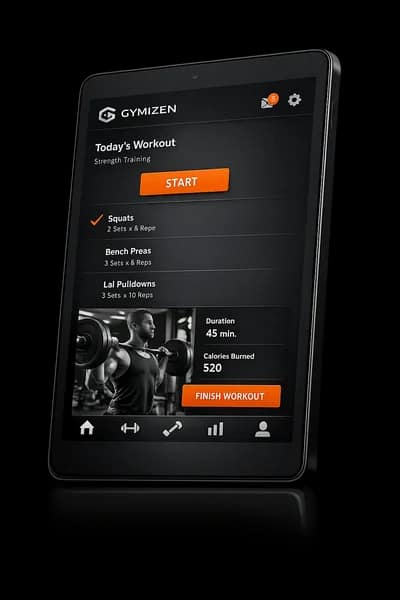
In Gymizen, operators often use approval gates to enforce this bounded flexibility—so exceptions exist, but don’t spread silently through the team. The key idea is operational: keep exceptions rare, tracked, and consistent, not ad hoc.
If you want a deeper operator perspective on boundaries, read The Policy Stack.
What to measure in the first 30 days (so you can actually manage it)
If you don’t measure first‑month behavior, you’ll manage based on vibes—and vibes are usually wrong because your happiest members are the most visible.
The minimum viable first‑month dashboard
- Day‑7 attendance: % of new members who attend at least 2 times in their first 7 days.
- Day‑14 consistency: % who establish a weekly pattern (e.g., 4+ total visits by day 14).
- Day‑30 target hit rate: % who meet your month-one attendance target (whatever number you chose).
- Coach continuity: % of new members who see the same coach at least twice in the first two weeks.
- Friction signals: late cancels, no-shows, failed payments, repeated reschedules—especially in the first two weeks.
Then connect the dots: retention outcomes usually follow these early behaviors. If your day‑7 attendance is weak, don’t start by changing pricing. Start by reducing friction and improving the on-ramp path.
For a broader KPI view, see The real retention dashboard for gyms and Studio benchmark report.
Operational levers that quietly make or break the first month
These are less exciting than “new branding,” but they’re the levers that consistently change early retention.
1) Protect beginner capacity during peak hours
If the only classes new members can attend are your most crowded classes, they’ll feel anonymous and behind. Consider protecting beginner-friendly slots (or beginner-friendly stations) during peak times.
Tradeoff: this can annoy your most committed regulars if it reduces their access. The operator move is to explain the “why”: protecting a healthy flow of new members protects the schedule, the coaches’ hours, and the studio’s stability.
2) Standardize the first-week script (without sounding scripted)
The best studios aren’t “more authentic” in week one—they’re more consistent. Train your team around three standard moments:
- Welcome: name + what to expect + where to go.
- Normalization: “It’s normal if this feels confusing today. You’re doing it right.”
- Next booking: “When are you coming back? Let’s pick two days now.”
This isn’t about turning staff into robots. It’s about ensuring the baseline experience is strong even on a busy day with a substitute coach and a slammed front desk.
3) Keep pricing and plan options simple during the first month
Complexity creates indecision, and indecision creates inactivity. During the first month, you want the member focused on attendance—not optimizing their plan. Two practical rules:
- Limit the “choose your own adventure.” Offer a clear default path (e.g., “Most new members start with X for 30 days.”).
- Delay the upsell until behavior is stable. If someone is attending 0–1x/week, selling a bigger plan often backfires and increases buyer’s remorse.
If you’re actively managing downgrade/plan-change leakage, you’ll also like The Plan-Change Guardrails.
A practical 30‑day cadence (what “good” looks like week by week)
Below is a strategic cadence you can adapt. The point is not the exact days—it’s having a repeatable rhythm your team can execute.
Week 1: Remove friction and secure the second visit
- Goal: get them to 2 visits in 7 days.
- Operator focus: clarity (what to take), reassurance (what’s normal), and next booking (anchors).
- Watch-outs: confusion about class types, intimidation, soreness spikes, and first-time late cancels.
Week 2: Create coach continuity and a visible win
- Goal: establish a pattern (e.g., 2x/week).
- Operator focus: keep them with a consistent coach or class block; acknowledge progress explicitly.
- Watch-outs: schedule disruption (travel, work spikes) and “I’m behind” feelings.
Week 3: Strengthen belonging and reduce decision fatigue
- Goal: keep consistency through the first “life gets busy” week.
- Operator focus: micro-relationships; reinforce anchors; encourage pre-booking.
- Watch-outs: missed sessions turning into shame spirals.
Week 4: Confirm identity (“this is what I do now”) and point to the next milestone
- Goal: hit the month-one attendance target.
- Operator focus: recognition + next-step planning (what month two looks like).
- Watch-outs: plan changes motivated by fatigue or unrealistic expectations rather than true fit.
Decision criteria: where to start if your first‑month retention is weak
If you’re not sure which lever matters most, use this quick diagnostic:
- Low day‑7 attendance? Fix friction: onboarding clarity, booking flow, schedule suitability, and first-class experience. Don’t start with pricing.
- Good day‑7, weak day‑30? Fix consistency: anchors, coach continuity, and making the next step obvious.
- High attendance but high cancellations/downgrades? Fix expectations and recovery: intensity progression, scaling, and plan fit. New members may be overtraining or overwhelmed.
- Strong retention for extroverts, weak for quieter members? Fix arrival/after-class moments and micro-relationships. Community can’t be optional for one personality type.
- Staff feels overwhelmed by “special cases”? Fix bounded flexibility: define which exceptions exist and use approval gates so exceptions don’t become your operating model.
Conclusion: retention is an operating system, not a campaign
Boutique retention is often won (or lost) before a member ever considers canceling. The first 30 days is where you either create a stable habit—or you create a fragile relationship that depends on motivation and perfect weeks.
If you want a concrete owner action plan coming out of this article, make it these three decisions this week:
- Set your month-one attendance target (by vertical and intensity) and train staff to communicate it simply.
- Define your confidence path: which class types new members should take first, and what the day‑30 milestone is.
- Codify bounded flexibility: identify the 3–5 exceptions you’ll allow in the first month, and decide who can approve them so your policies stay consistent.
Do that, and you’ll be building what the best operators have: a first‑month retention engine that works even when you’re not on the floor—because it’s designed into how your studio runs.