

Most boutique fitness operators treat membership freezes like a customer-service concession: something you “allow” when someone asks. That framing creates two problems at once: (1) inconsistent decisions that feel unfair to members and exhausting to staff, and (2) silent revenue leakage that compounds because freezes extend memberships without any operational counterbalance.
A better framing: a hold is a retention product. Like a trial, a class pack, or a downgrade tier, it’s a designed offer with rules, guardrails, and a clear outcome: keeping high-fit members attached to your business when life temporarily disrupts attendance.
This guide walks through the operating judgment behind a “freeze without leakage” system—one that is flexible enough to retain good members, but structured enough to protect margin, capacity, and team sanity. It’s written for owners and managers of CrossFit gyms, yoga and pilates studios, martial arts schools, and boxing gyms who want fewer emotional debates and more consistent outcomes.
Why holds are either a retention lever—or a slow leak
The reason holds get messy is that they sit at the intersection of money, fairness, and identity. Members don’t ask for a freeze because they want a deal; they ask because they feel like “a member” and don’t want to lose that identity when travel, injury, finances, burnout, pregnancy, school schedules, or work stress hits.
Operators, meanwhile, feel two competing truths:
- Truth #1: Letting someone cancel is often permanent. A hold can save a long-term member relationship.
- Truth #2: Unlimited flexibility teaches members to treat membership like a subscription they can pause any time—without cost, commitment, or planning.
If your team handles holds as ad-hoc exceptions, you end up with predictable symptoms: “policy shopping,” resentment from consistent payers, staff anxiety (“Am I allowed to say no?”), and accounting confusion (proration, credits, and mismatched end dates).
A well-designed hold system does the opposite: it reduces churn and reduces drama by making the default path obvious—while reserving true exceptions for a small set of approved cases.
The operator goal: keep the relationship, not the illusion
The purpose of a hold is not to preserve someone’s exact membership economics at all costs. The purpose is to preserve the relationship long enough for them to return to attendance—and to do it in a way that feels fair to other members and sustainable to your business.
That means your hold policy should explicitly optimize for four outcomes (in this order):
- Retention of high-fit members who have a temporary disruption.
- Fairness and predictability for the whole community (so you don’t create a “smartest complainer wins” culture).
- Margin protection (because holds extend service without matching cash flow or staffing realities).
- Operational simplicity for staff (so a hold request becomes a 2-minute conversation, not a 20-minute negotiation).
The 7 design levers of a “freeze without leakage” policy
Your policy isn’t one rule. It’s a bundle of decisions. When holds go wrong, it’s usually because one lever was set without considering the rest.
1) Eligibility: who gets access to a hold (and when)
Most studios accidentally offer holds to the people least likely to stay: brand-new members who haven’t built habit yet. That can become a slow-motion cancellation where the member pauses, disengages, and never returns—while you extend the membership and confuse your forecasting.
Consider eligibility gates like:
- Minimum tenure (e.g., holds available after 60 or 90 days).
- Good standing (autopay current; no unresolved chargebacks; no repeated policy violations).
- Commitment alignment (annual/6-month agreements may get more flexible hold options than month-to-month).
Tradeoff: strict eligibility protects revenue but can force early-tenure members into cancellation. The operator move is to provide an alternative for new members (like a temporary downgrade tier or limited pack) instead of a full freeze.
2) Notice period: how far in advance a hold must be requested
Notice period is where fairness is created (or destroyed). If members can request a hold retroactively (“I didn’t come last week, can you pause it?”), you’ve created a pay-only-when-I-attend model.
Most boutiques do well with a simple standard: holds must start on the next billing cycle (or require X days notice).
Tradeoff: emergencies happen. That’s what approval-gated exceptions are for (more on that below). Your default should still prevent “attendance-based billing by negotiation.”
3) Duration: minimums, maximums, and frequency
Duration is the lever that decides whether a hold is a bridge or a limbo. Many operators unintentionally offer “infinite holds,” which are effectively soft cancellations that clutter your active member count and staff attention.
Useful patterns:
- Minimum hold length (e.g., 14 days) to avoid 1-week “micro-pauses” that are really just schedule preferences.
- Maximum hold length (e.g., 30–60 days per hold) so you can re-engage before the relationship cools.
- Frequency cap (e.g., 1–2 holds per 12 months) to prevent habitual pausers from gaming the system.
Tradeoff: some verticals have legitimate longer disruptions (injury in CrossFit, belt-testing cycles in martial arts, seasonal travel for snowbirds). In those cases, longer holds can exist—but should be paired with a reactivation plan and check-ins, not just a calendar extension.
4) Price: free hold, paid hold, or “hold converts membership type”
This is where many operators either over-correct (harsh fees that feel punitive) or under-correct (free holds that become the default move).
There are three clean approaches—each with a different strategic intent:
- Free hold (limited): Works when you want to remove friction for high-fit members, but you control leakage with strict frequency + notice rules.
- Paid hold fee: A small monthly fee (not a penalty) that keeps a financial tether and covers administrative overhead. It also screens out casual “maybe I’ll come back” behavior.
- Hold becomes a lower-access plan: Instead of a full freeze, the member moves to a limited plan (e.g., 1 class/week or open gym only). This preserves habit and relationship better than a true pause.
Operator heuristic: if your churn is driven by life disruption, holds should be easy. If your churn is driven by low perceived value or inconsistent attendance, holds should be structured so they don’t reward disengagement. In those cases, “safe downgrades” often outperform freezes.
5) What happens to access: app, booking, and community touchpoints
A silent churn pattern: you freeze someone and they disappear completely—no communication, no community, no identity. Then reactivation is hard because you’re trying to restart a cold relationship.
Consider intentionally separating training access from community access. For example, a held member might lose booking rights (fair), but keep certain community touchpoints (smart): newsletters, event invites, challenge announcements, educational content, or a monthly check-in message.
Tradeoff: if your classes are consistently waitlisted, you may need stricter access removal to protect paying members’ capacity. That’s a capacity ethics issue as much as a pricing issue.
6) What happens to billing math: proration, end dates, and “ghost extensions”
The most common leakage isn’t “free holds.” It’s accidental extensions created by inconsistent billing logic: pausing mid-cycle, promising a credit, shifting renewal dates, and stacking manual notes that no one can audit later.
From an operator standpoint, you want one of two clean models:
- Cycle-based holds: hold starts on the next billing date; billing date remains stable; the “time owed” is extended in a visible, standardized way.
- Immediate holds with standardized proration: used rarely; requires strict approval because it’s where mistakes happen.
The main judgment: choose the model your staff can execute consistently. Sophisticated proration rules that only the owner understands are not sophisticated—they’re fragile.
7) Re-entry: how members come back without friction (or awkwardness)
The hold decision isn’t finished when the hold starts—it’s finished when attendance restarts. You should define what a “successful reactivation” looks like and design the re-entry path.
Examples of re-entry supports that reduce churn:
- First-week schedule plan: “Let’s pick two classes you’ll attend in your first 7 days back.”
- Coach note: the coach knows they’re returning (reduces anxiety and improves belonging).
- Modified training option: especially for injury or post-travel deconditioning.
Approval-gated exceptions: how to be human without training members to negotiate
If your policy is too rigid, staff will break it to be kind. If your policy is too flexible, staff will be forced into constant negotiation. The operator solution is approval-gated exceptions: a defined set of reasons that allow a manager/owner override, with documentation and consistency checks.
You’re not just controlling money—you’re controlling precedent. Every exception teaches your community what “works” when they want something.
Define the exception categories (and keep them few)
A practical set of exception categories might include:
- Medical / injury (with reasonable privacy; you don’t need details, just a category).
- Family emergency (short-term, often retroactive requests).
- Billing error (your mistake, your fix).
- Operational failure (e.g., repeated class cancellations, facility closure, coach absence).
Notice what’s not on the list: “too busy,” “travel,” “I didn’t come,” “money is tight.” Those are real situations, but they’re usually better served by plan design (downgrades, shorter commitments, or structured holds with fees) rather than exceptions.
Build the staff script: empathy + boundaries in one breath
Staff struggle with hold conversations when they feel they must choose between being kind and enforcing rules. Give them language that does both. For example:
“Totally understand—this is exactly what our hold option is for. The standard hold starts on your next billing date and can run for up to 30 days. If you need something outside that because of a medical or family emergency, I can submit it for manager approval so we keep it consistent and fair.”
That script does three operator-important things: it validates, it offers a clear default, and it routes exceptions into an approval mechanism rather than a front-desk negotiation.
Vertical-specific holds: what “fair” looks like in different boutique models
A hold policy that works for a low-capacity reformer pilates studio may fail inside a CrossFit gym with open gym access; a martial arts school has rank progression and testing cycles that change how “time away” feels. Use your vertical’s operational truth to set rules that members will experience as legitimate.
Pilates studios: capacity ethics matter more than almost anything
With tight class caps and equipment constraints, you must protect prime-time access for actively paying members. If you allow held members to retain booking rights “just in case,” you’ll create resentment and waitlist friction fast. Pilates operators often win by offering a downgrade hold (e.g., a minimal monthly fee that keeps membership status but not booking privileges) paired with a clear re-entry booking plan.
Yoga studios: holds can preserve identity—but don’t let them replace habit
In yoga, the biggest risk of a hold is emotional drift: the student stops seeing themselves as “a yoga person.” Consider holds that keep a light tether—community invites, a monthly workshop discount, or a limited class option—so their identity stays connected even when frequency drops.
CrossFit gyms: injury holds are common—so standardize them
CrossFit has higher injury probability than many modalities (even when coached well) simply because intensity and loading are part of the game. If you treat injury holds as exceptions every time, you’ll live in manager overrides. Instead, create a standard injury path: a hold option plus a re-entry ramp (or a temporary “skills/engine only” plan) so injured athletes don’t fully detach.
Martial arts schools: progression changes what members are actually buying
In martial arts, members aren’t only buying classes; they’re buying progression, belonging, and a coach-led path. Holds must protect the student’s sense of continuity (and avoid shame when they return). But holds can also quietly disrupt belt-test eligibility or training milestones. Consider a re-entry check-in or a “return week” plan that resets expectations without making them feel behind.
Boxing & martial arts striking gyms: travel + schedule volatility are frequent
These businesses often attract members with variable work schedules. If you offer unlimited holds, you’ll train members to pause whenever work gets busy. The stronger move is a membership ladder that includes a low-frequency option for “busy seasons,” so members stay active (and paying) without feeling trapped.
Decision criteria: when to offer a hold vs. a downgrade vs. a win-back
Not every “I can’t make it” should become a hold. Here’s an operator decision framework that reduces leakage and improves retention quality.
Offer a hold when the disruption is temporary and the member is high-fit
- They have consistent attendance history (recently).
- They like the community/coaches (not just the concept).
- They can name a return date window.
- The reason is life disruption, not dissatisfaction.
Offer a downgrade when the disruption is ongoing or schedule-based
- Work schedule is chaotic for the next 3–6 months.
- Finances are tight but they still want to train.
- They’re not attending enough to justify unlimited.
- Your capacity is tight and you need active members paying for prime access.
Use a win-back flow when they’re already disengaged
If the member hasn’t attended in weeks and is asking for a retroactive hold, they’re often already halfway out. In that case, a clean cancellation with a structured reactivation plan can outperform a hold that drags out the inevitable and creates accounting noise.
The fairness principle: don’t punish planners and reward chaos
Your best members often do the “right” thing: they plan, communicate early, and try to stay consistent. If your policy gives the best deals to last-minute requests (“Sure, we’ll pause retroactively”), you punish planning and reward chaos.
A hold policy should make early communication the easiest path. You can still be human in emergencies, but the default should teach members what good process looks like.
Operational examples: three hold policies that work (and who they fit)
Below are three example policy “shapes.” These are not templates you must copy—use them to pressure-test your own constraints (capacity, member profile, and cash flow).
Policy A: The simple retention bridge (best for community-driven gyms)
- Eligibility: after 90 days of membership
- Notice: applies next billing date
- Duration: 14–30 days
- Fee: free, once per rolling 12 months
- Access: no booking; community comms stay on
Why it works: it’s easy to explain, hard to game, and protects the relationship. Why it fails: if your members are schedule-volatile, they’ll hit the annual hold and then ask for more (you’ll need a downgrade tier).
Policy B: The paid tether (best for high-demand, capacity-tight studios)
- Eligibility: any member in good standing
- Notice: 7 days
- Duration: 30 days (renewable once with approval)
- Fee: small monthly hold fee
- Access: booking disabled; member can attend a limited “return class” on reactivation
Why it works: it reduces misuse and keeps revenue more predictable. Why it fails: if the fee feels like a penalty, you’ll get trust damage. Position it as “keeping your spot + admin + keeping you connected,” not as punishment.
Policy C: The downgrade-first system (best for schedule-volatile member bases)
- Default: downgrade to 1x/week (or limited access) for up to 90 days
- Hold: reserved for medical/family emergencies or travel longer than X weeks
- Re-entry: automatic return to prior plan on a set date unless member opts out
Why it works: preserves habit and reduces “membership amnesia.” Why it fails: if your downgrade option is priced poorly, you’ll cannibalize your core plan (this is a pricing design problem, not a hold problem).
What to measure: the operator metrics that tell you if holds are helping or hurting
You don’t need a complicated analytics stack to know if holds are working. You need a few simple, reviewable signals that connect holds to retention outcomes.
- Hold rate: holds started as a % of active members per month. Spikes often indicate pricing mismatch, schedule issues, or service failures.
- Return rate: % of held members who attend within 14 days of hold end. If this is low, your “re-entry” is broken.
- Post-hold churn: cancellations within 30–60 days after a hold. High rates mean holds are acting as a “soft exit.”
- Exception rate: % of holds that required manager approval. If this is high, your policy is too strict or unclear.
- Retroactive request rate: how often members ask to pause after missing time. High rates mean your policy is teaching attendance-based billing by negotiation.
Operator cadence: review these weekly in a 15-minute manager huddle, then do a deeper monthly review. The goal is not to shame staff—it’s to see whether the policy is producing predictable outcomes.
Common failure modes (and how to correct them without getting harsher)
Failure mode 1: “We approve almost every hold request”
This usually means your team is avoiding conflict. Fix it by improving the default path (a clean hold option + a downgrade option) and giving staff scripts—not by telling them to “be tougher.”
Failure mode 2: “Holds are mostly coming from new members”
This is often an onboarding/expectations issue or a trial-to-member mismatch. New members don’t yet have the habit; a hold just interrupts habit formation. Consider shifting the first 60–90 days toward habit-building accountability: goal setting, intro series, or a limited plan that fits their real schedule.
Failure mode 3: “Holds create billing confusion and manual notes”
This is a process design problem. The operator fix is to reduce the number of hold variants. If your policy has eight different hold lengths, three fee structures, and custom proration, you don’t have flexibility—you have chaos.
Failure mode 4: “We offer holds because members complain about value”
That’s not a hold problem; it’s a value delivery problem. In that situation, holds can actually delay the feedback loop you need. You may need service recovery (fix the issue) or pricing ladder adjustments (give them a sustainable plan), rather than pausing the relationship.
How Gymizen fits (without turning this into a setup tutorial)
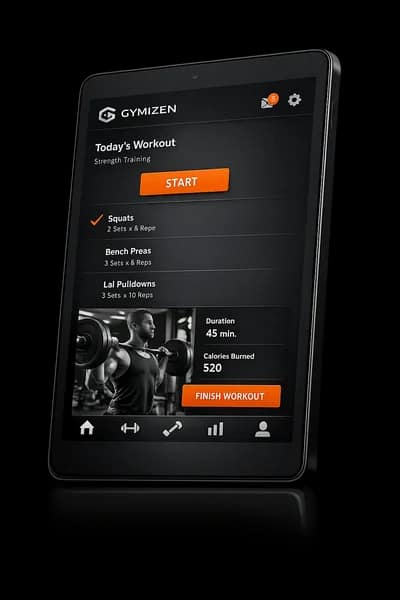
Because Gymizen is operator-led gym management software, the practical advantage of an approval-gated hold system is that you can run it like an operating policy—not like a series of favors. The point isn’t to automate empathy; it’s to make exceptions visible, auditable, and consistent so your team can be human and predictable.
If your holds are currently tracked in DMs, sticky notes, or memory, the operational risk isn’t only revenue. It’s culture: staff start feeling like they’re constantly adjudicating fairness. Approval gates, clear categories, and consistent outcomes reduce that load.
A clear conclusion you can act on this week
If you want holds to prevent churn without turning into discounts, don’t ask, “Should we be nicer or stricter?” Ask, “What is the designed retention product here—and what behavior does it teach?”
To tighten your system quickly, do these three operator actions:
- Pick one default hold option your staff can explain in 20 seconds (with notice, duration, and frequency clearly defined).
- Add one alternative to a hold (usually a temporary downgrade) so “I can’t attend like I used to” doesn’t automatically become “pause everything.”
- Define approval-gated exception categories and give staff a script that routes edge cases to a manager without negotiation at the front desk.
When you do this well, holds stop being a source of leakage and resentment—and become what they were always supposed to be: a structured bridge back to consistent attendance.
If you want to go deeper, pair your hold policy with a pricing ladder (so downgrades are safe), weekly retention reporting (so you can see leakage early), and a win-back window (so true cancellations aren’t the end of the relationship).