
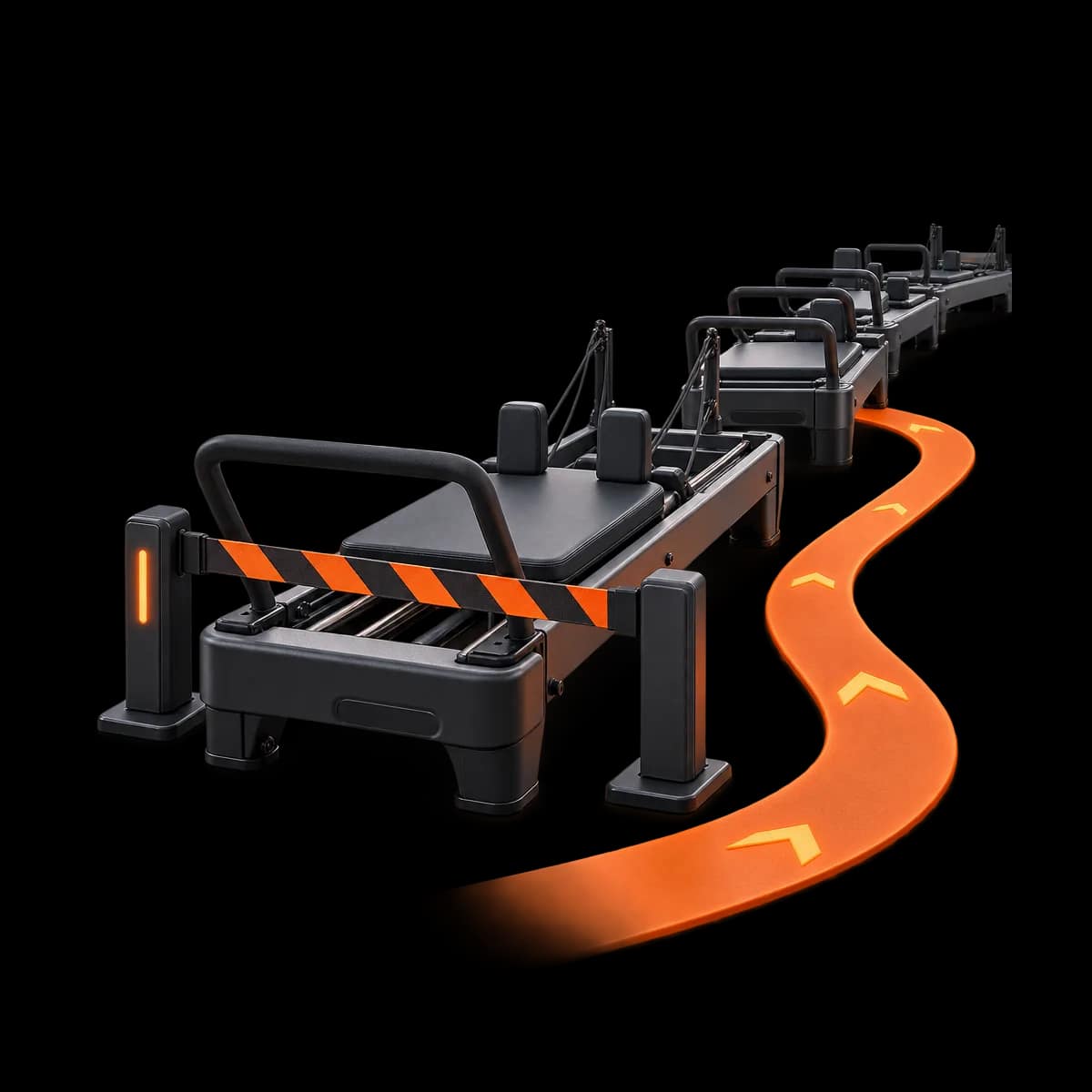
At 5:40 p.m., an instructor reports that one reformer does not feel right. The 6:00 class is full, two members are waiting, and the front desk has twenty minutes to decide what happens next. The tempting response is to keep the class looking full: swap someone onto the questionable machine, squeeze in a mat station, or hope an empty booking appears. None solves the actual problem. The studio has lost one usable place in a class that people chose for a specific experience.
Equipment downtime is usually treated as a maintenance issue. For a reformer studio, it is also a capacity, staffing, communication, and retention issue. The owner’s job is not to promise that machines never fail. It is to make the response predictable enough that staff can act promptly and members can still trust their booking. The operating question is: when one station disappears, which commitments remain intact, and who decides the exceptions?
One unavailable machine creates three separate problems
First, there is a safety and equipment decision: can the machine be used at all? That belongs to the studio’s designated equipment lead, following the manufacturer’s instructions and, when needed, a qualified service professional—not to a busy instructor improvising between classes. Second, there is a capacity decision: how many people can receive the class they booked with the remaining usable stations? Third, there is a relationship decision: what does the studio owe the member whose place is affected?
Treating these as one decision creates avoidable arguments. An instructor may feel pressured to declare the machine usable because the class is full. A front-desk employee may offer an unusually generous credit because nobody has defined the remedy. Separate the decisions. A machine can be unavailable without the instructor being blamed for lost revenue; a member can receive a fair alternative without a staff member inventing a new policy.
Set the stop-use threshold before a class is on the line
The worst moment to debate whether an unusual sound is acceptable is while members are arriving. Give instructors a clear way to flag a concern and take a station out of service pending review. Document what they observed, which machine it was, when it happened, and who has authority to return it to use. Do not ask coaches to diagnose a component beyond their training. Follow the manual for each make and model; maintenance intervals and replacement requirements are not interchangeable across brands.
This is not just caution for caution’s sake. Merrithew publishes product-care and inspection guidance, including equipment-specific maintenance resources, and advises a two-year spring replacement interval for its spring equipment. That is Merrithew’s guidance, not a universal rule for every reformer. An operator with mixed equipment should maintain an equipment register by model and serial number, then use the applicable manufacturer’s instructions for inspections, cleaning, parts, and service decisions.
Make reduced capacity a real number, not a hopeful one
A studio with ten reformers and one unavailable station has nine reformer places. It does not automatically have a ten-person class because there is floor space for a mat. A mat variation may be an excellent planned format; it is not necessarily the same product as a reformer class, nor appropriate for every participant or instructor. If the class description, price, and member expectation are built around a reformer, count only usable reformer stations when deciding whether the original booking can be honored.
Decide in advance what counts as a legitimate substitute. A private room with another reformer may work if an instructor can supervise it without diminishing the class. A mat-based variation might work if the format explicitly permits mixed stations and the instructor has designed for them. Neither should be a last-minute way to avoid contacting a member. The test is simple: would you describe this experience accurately before the member paid for it? If not, offer a choice rather than silently changing the product.
Choose a fair displacement rule—and publish the principle
When capacity falls after bookings are confirmed, someone may lose a place. An owner should choose a rule before the first incident. One workable default is to honor the earliest confirmed bookings, contact the most recently confirmed member, and offer the next suitable opening or a reversal of the class charge or credit. That rule is easy to explain, though it can repeatedly affect people whose schedules force them to book late. If that pattern appears, address the underlying scheduling problem rather than asking the front desk to make inconsistent exceptions.
There are legitimate exceptions. A member with an accessibility need, a prepaid private appointment, or a previous studio-caused displacement may warrant a manager’s judgment. Keep that authority narrow and visible: the front desk can make the standard offer; a manager approves anything that changes priority, grants additional value, or sets a precedent. Approval-gated judgment should speed up fair decisions, not make an affected member wait hours for permission to receive a routine refund.
Communicate the choice, not the mechanical mystery
Members need to know whether their class is happening, whether their place is confirmed, and what they can do if it is not. They do not need a speculative diagnosis. A useful message says that a station is temporarily unavailable, the studio has reduced capacity, the member’s booking is affected, and their options are a specific alternative class or a full restoration of the session they could not use. Include a clear reply route and deadline if an alternative needs to be held.
“A reformer is out of service, so we have reduced capacity for tonight’s 6:00 class. We cannot honor your booking as planned. We can hold you a place tomorrow at 7:00, or return this session to your pack. Reply with your preference; we’re sorry for the disruption.”
Contact affected members as soon as the decision is made; do not wait for them to discover it at check-in. If the notice is very short, a direct call may be more useful than a message alone. Do not promise an alternative time merely because it exists on the schedule. Check whether the class suits the member’s level, instructor requirements, and normal attendance pattern. A 6:00 a.m. opening is not a meaningful replacement for everyone who attends at 6:00 p.m.
Protect the member’s routine, not just the lost session
A returned credit settles the transaction. It does not restore Tuesday evening as a reliable part of someone’s week. For a regular member, the better recovery question is: can we help them keep their usual cadence? If a Tuesday class is disrupted, look for another Tuesday slot, the same instructor on Thursday, or a suitable opening the following week. Offer choices, but do not book a member into a format they did not request merely to close the issue.
Consider a member who usually attends twice weekly and loses one of those places. If the only remedy is a credit that expires with their pack, the studio has technically compensated them while making their routine harder to sustain. If the member instead receives a promptly held, suitable alternative—or a credit with enough time to use it—the business has a better chance of preserving the habit. The distinction matters especially in smaller studios where a single recurring slot is the member’s only workable time.
Build slack where a failure would be most expensive
Keeping a reformer permanently empty in every class may be too costly. Running every prime-time class at the absolute limit can be costly in a different way. The right buffer depends on how often equipment becomes unavailable, how quickly it can be serviced, how much demand exists for each time slot, and whether affected members have realistic alternatives. Those are operating inputs, not a universal target utilization percentage.
For example, a ten-reformer studio might keep normal capacity at ten when all machines are serviceable, but avoid selling an eleventh place on the assumption that someone will cancel. It might also maintain a small number of reachable alternative openings across the week rather than filling every comparable class through aggressive promotions. If incidents repeatedly affect the same popular hour, a spare reformer, faster service arrangement, or different class distribution may be worth more than a standing capacity buffer. Compare the cost of the option with actual disrupted bookings before deciding.
Schedule maintenance around demand, not around panic
Inspections and planned replacements consume time and sometimes remove equipment from sale. That is a feature of a reliable operating plan, not proof that the studio is inefficient. Maintain a record of each machine’s identity, relevant service dates, reported issues, and return-to-use decisions. Assign one owner of the record, even if instructors share responsibility for reporting what they notice. Follow manufacturer guidance for the actual work; a business calendar cannot determine whether a part is safe.
Where possible, place planned work during low-demand periods and publish any resulting schedule change before members form expectations around that slot. Consider the tradeoff between servicing one machine at a time, which preserves more daily capacity, and closing a block of time for a thorough visit, which may reduce repeat disruption. The better choice depends on the service provider, the condition of the fleet, and how easily members can move. Do not defer work solely because a class is popular.
Give staff a decision boundary they can use under pressure
Staff should not need an owner’s approval to stop use of a concerning machine, reduce bookable capacity to the number of usable stations, notify affected members, or restore a session the studio could not deliver. They should escalate a disputed priority decision, a change to the advertised class format, a nonstandard goodwill offer, or a decision to return equipment to use when the designated reviewer has not cleared it. This division protects both speed and accountability.
Make the handoff short enough to survive a busy shift. The instructor reports the station and concern; the designated equipment lead determines its status; the manager decides any capacity or format exception; the front desk contacts affected members and records the outcome. If one person fills several roles in a small studio, the decisions still remain distinct. A timestamped record prevents tomorrow’s instructor from assuming yesterday’s unresolved concern has disappeared.
Measure disruption in member terms
Equipment availability alone is an incomplete measure. Review how many classes ran at reduced capacity, how many confirmed bookings were displaced, how much notice those members received, how many accepted a suitable alternative, and whether affected regulars returned to their normal attendance pattern. Add the labor and service costs of each incident. These measures help distinguish an isolated breakdown from a recurring operating weakness.
Interpret the numbers with context. A low displacement count might reflect excellent maintenance—or classes with ample unused capacity. A high rebooking rate may still conceal frustration if members felt pushed into inconvenient times. Read a sample of the actual incidents alongside the totals. If the same member is displaced twice, a manager should review that relationship personally rather than treating both events as successfully resolved tickets.
Where management software helps—and where it cannot decide
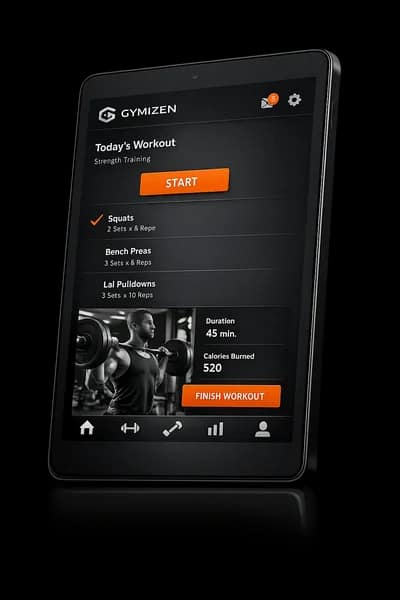
Operator-led software such as Gymizen is most useful here when bookings, attendance, member history, and team follow-up give the manager a shared view of who was affected and what happened next. It can support timely communication and make repeated disruptions visible. It should not decide whether a reformer is serviceable, whether a mixed-format class is appropriate, or which unusual exception is fair. Those remain human operating judgments with named owners.
Start with one question at the next managers’ meeting: if a reformer went offline fifteen minutes before our busiest class, who would decide each part of the response? Write down the stop-use authority, the reduced-capacity rule, the standard member remedy, and the exceptions that need approval. Then review the last few disruptions against those decisions. The goal is not a perfect script for every failure. It is a studio where an equipment problem does not become an avoidable breach of member trust.