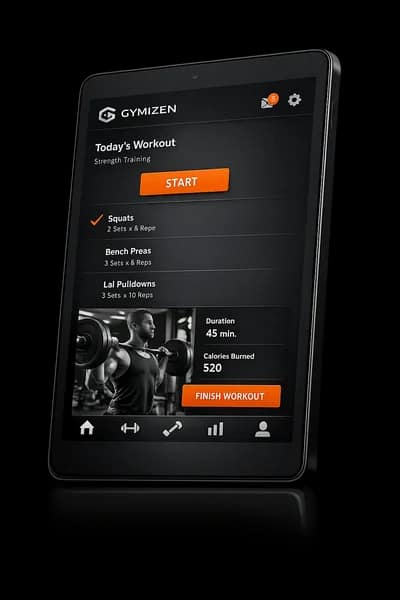


Rolling out a member app should reduce front desk load, not create a two-week storm of “I can’t log in,” “Can you book it for me,” and “Can you waive it this time?” The difference is sequence and controls: you want members to adopt self-serve behaviors while staff keeps a consistent policy line—without sounding rigid or uncaring.
This guide is a practical, approval-gated rollout plan for the Gymizen member app (or portal): configuration, communication, training, QA, and the operating rhythm for the first 30 days. It’s written for boutique operators—CrossFit gyms, yoga and pilates studios, martial arts schools, and boxing gyms—where retention is won or lost in the day-to-day experience.
What you’re building (and why approval gates matter)
A member app rollout is not primarily a “tech launch.” It’s a behavior change: members shifting from staff-mediated requests to self-serve workflows (booking, canceling, waitlist, account updates, and message consumption).
Approval gates matter because the first two weeks of rollout produce the highest volume of exception requests. If every exception is handled ad hoc by whoever is on shift, you unintentionally create “policy by personality.” Approval gates let you keep empathy and consistency: staff can help, but only within guardrails, and exceptions require explicit approval from the right role.
Prerequisites (complete before Day 1)
- Member data is clean enough to identify members uniquely: accurate names, emails, phone numbers, and membership status. If you’re mid-migration, complete a first-pass cleanup so members can actually log in and see the right account.
- Your booking policies are decided (not necessarily perfect): cancellation window, late cancel/no-show handling, waitlist rules, and capacity limits. The app rollout is not the time to “debate policy live” with members.
- Front desk and managers have a shared escalation path: what the desk can do immediately vs what requires approval.
- You have a comms owner: one person (usually the GM) who will approve member-facing messages and timing changes during the rollout.
- You’ve scheduled 3 internal sessions: (1) Admin setup review (60 min), (2) Front desk workflow training (60 min), (3) Coach briefing (20 min).
Recommended rollout defaults (use these unless you have a strong reason not to)
These defaults keep your rollout stable. You can always loosen later—but tightening after members learn “the easy way” is harder.
- One login pathway: pick email or phone as the primary identifier for member access. Avoid telling members “try either” during launch.
- Standard cancellation window: keep one rule for most classes (e.g., 8–12 hours) during rollout. If you currently vary by class type, consider standardizing first, then re-introduce complexity later.
- Waitlist enabled + automated promotion (where applicable): members should see a consistent “Join Waitlist” path instead of DM’ing coaches for spots.
- Two-tier exception model: desk can do small fixes; managers approve anything that changes money, policy penalties, or creates precedent.
- Single source of truth messaging: one pinned “How to book” message plus one FAQ. Everything else links back to those.
Roles and responsibilities (who does what, and who approves what)
Define roles before you touch configuration. If you skip this, staff will improvise, and your app adoption turns into staff workload.
Owner / Operator (final approver)
- Approves any temporary policy changes for launch week (e.g., a one-time late cancel amnesty).
- Approves changes that impact revenue leakage risk (discounts, fee waivers, credits, refunds).
- Sets the non-negotiables: “This is how we book now,” and “Staff will help you learn it.”
General Manager / Studio Manager (rollout owner)
- Owns the 10-day plan and daily checklist.
- Approves member-facing communications (timing, wording, FAQs).
- Reviews the exception queue daily during the first 14 days and identifies policy confusion patterns.
Front Desk / Member Success (primary support)
- Handles login help and first-time booking walkthroughs.
- Uses approved scripts for common issues (password reset, “I don’t see my membership,” cancellation rules).
- Escalates exceptions via approval gates rather than “just doing it” to keep the line consistent.
Coaches (in-class reinforcement)
- Reinforce behaviors: “Make sure you’re booked in the app,” “Join the waitlist if it’s full.”
- Do not promise exceptions (spots, fee waivers, policy overrides). Instead: “Front desk can help you, and they’ll escalate if needed.”
The 10‑day approval‑gated rollout timeline
This timeline assumes you’re already operational in Gymizen and you’re shifting member behavior to the app/portal. If you’re also switching systems, pair this guide with your migration and go-live cutover plan.
Day 1 — Define the “self‑serve contract” (policies + promises)
- Write your self-serve promise (1 paragraph): “You can book/cancel anytime in the app; you’ll see waitlists live; your plan and purchase history is in one place.”
- Write your policy line (1 paragraph): cancellation window, late cancel/no-show handling, and what support will/won’t do.
- Define the escalation ladder: what the desk can do vs what requires manager approval.
- Approval gate setup decision: choose the list of actions that will require explicit approval during the first 30 days (recommended list below).
Recommended approval-gated actions during rollout: fee waivers, retroactive cancellations, converting a no-show to attended, adding a member to a full class without waitlist, changing membership start dates, issuing account credits, and overriding booking limits.
Day 2 — Configure member access and identity matching (reduce login tickets)
- Confirm your primary identifier (email or phone) and ensure it’s populated for the vast majority of active members.
- Audit duplicates: identify obvious duplicates (same person, two profiles) and decide your merge process (who can request, who approves, how it’s logged).
- Set the support script: one standard response for login issues so members get consistent guidance.
- QA check: test 5 real member accounts (different membership types) end-to-end: login → see plan/credits → book → cancel → join waitlist.
Implementation tip: most rollout pain comes from identity mismatch. Spend more time here than you think you need. If members can’t get in on first try, they won’t “try again later”—they’ll revert to texting staff.
Day 3 — Align schedules, capacities, and booking rules (so the app reflects reality)
- Validate class types: each class should have the correct duration, location (if applicable), capacity, and coach assignment.
- Confirm booking windows: when members can book (e.g., 7 days in advance) and cancellation cutoff.
- Waitlist behavior: verify that “full” classes clearly present a waitlist option and that members understand promotion flow.
- Set booking limits intentionally (if you use them): e.g., max bookings per day/week for certain plans—make sure the rule is communicated before members hit it.
- QA check: pick 3 classes this week that typically fill up. Ensure the member experience is predictable: spots decrease correctly, waitlist appears, and cancellations return capacity.
Day 4 — Build the member-facing “Launch Kit” (one FAQ + one how-to)
Your goal is not to answer every edge case. Your goal is to reduce 80% of inbound questions with two assets.
- Create a “How to Book” guide (short): login, book, cancel, waitlist, and where to see membership/credits.
- Create a rollout FAQ (10–15 questions): “Why the change?” “What if I can’t log in?” “What if I’m on the waitlist?” “What’s the late cancel window?”
- Approval gate: require GM approval for any FAQ edits during the first 10 days so you don’t publish conflicting answers.
- In-studio reinforcement: print a small QR code sign (or front desk prompt) that links to the same two assets. Keep it minimal.
Day 5 — Staff training (front desk first, coaches second)
Training should be workflow-based: what happens when a member can’t log in, can’t book, wants an exception, or is upset about a policy.
Front desk training agenda (60 minutes)
- Walkthrough: book/cancel/join waitlist as a test member.
- Login troubleshooting tree: “Do we have the right email/phone?” → reset flow → duplicate profile escalation.
- Membership visibility: what it looks like when a member has an active membership vs expired vs class pack vs intro offer.
- Approval-gated exceptions: how to request, what info to include (date/time, class, reason, member history), and what not to promise.
- Scripts practice: 3 role-play scenarios (see below).
Coach briefing agenda (20 minutes)
- What’s changing: “Bookings are now member self-serve via the app.”
- Coach language: “If you’re not booked, please book now—front desk can help.”
- No exception promises: coaches don’t add members to full classes or waive fees.
- Escalation: who coaches contact if they see a recurring member issue.
Three scripts that reduce conflict (use as-is during rollout)
- Login help: “Let’s get you in. Can I confirm the email/phone on your account? Once you’re in, you’ll be able to book and manage everything yourself going forward.”
- Policy boundary with empathy: “I get it—life happens. During rollout we’re keeping policies consistent so everyone gets the same experience. I can submit an exception request for manager review.”
- Waitlist reassurance: “If it’s full, join the waitlist in the app—spots usually open as people cancel. You’ll see your position, and you’ll be notified if you’re promoted.”
Day 6 — Soft launch to a pilot group (reduce blast-radius)
Pick 20–50 members who are high-trust and high-frequency (your “regulars”) and ask them to start booking only through the app for 72 hours. Your goal is to surface friction before the full launch.
- Send pilot message with the How-to and FAQ links.
- Front desk logs issues into 3 buckets: login/identity, booking/rules, confusion/communication.
- Daily review (15 minutes): GM + front desk lead scan issues and decide what to fix vs what to clarify in messaging.
- Approval gate: any configuration changes discovered in pilot require GM approval before being applied (to avoid “someone fixed it quickly” changes that create inconsistency).
Day 7 — Fix the top 5 friction points + run QA again
Don’t try to fix everything. Fix what will affect the highest volume of members.
- Address identity issues: merge duplicates, correct primary identifiers, and clean obviously wrong contact fields.
- Clarify policy confusion: tighten your FAQ and make the policy line unambiguous.
- Validate edge plans: intro offers, comp memberships, staff memberships, class packs.
- QA check repeat: same 5 test accounts plus 2 pilot members who had problems. Confirm each issue is resolved.
Day 8 — Full launch communication (with a support plan attached)
Your full launch message should do three things: (1) explain the why, (2) tell members exactly what to do next, (3) tell them what support looks like.
- Send the launch announcement (email + SMS as appropriate). Keep it short; link to the How-to and FAQ.
- Set a two-week support window: “If you need help logging in, come 10 minutes early or reply here.”
- Staff the first 72 hours: add extra front desk coverage for peak class times.
- Approval gate: lock message edits after send—changes require GM approval so staff doesn’t get asked to explain conflicting versions.
Day 9 — Enforce self‑serve gently (with escalation, not exceptions-by-default)
This is where many rollouts fail: staff gets busy, starts “helping” by taking over bookings, and members learn that the app is optional. Your goal is to help members use the app, not avoid it.
- Default response: “Let’s do it together in the app once, then you’ll have it.”
- Exception requests go through approvals: desk submits; managers approve/deny with a short note.
- Track the reason codes for exceptions (even informally): forgot, tech issue, policy confusion, emergency.
Day 10 — Go from “launch” to “operating cadence” (make adoption stick)
- Daily (first 14 days): GM reviews exception queue and top inbound questions; updates FAQ if needed (approval-gated).
- Weekly (first 4 weeks): review adoption signals: percent of bookings self-serve, waitlist usage, late cancels/no-shows volume, and support ticket volume.
- After 30 days: decide what to keep approval-gated vs delegate (typically keep money- and precedent-changing actions gated).
Configuration checklist (the “don’t forget these” items)
- Member identity fields: email/phone populated; duplicates flagged; merge process defined.
- Class capacities: reflect reality; special events have separate capacity rules.
- Booking windows: consistent across core offerings; exceptions documented.
- Cancellation windows: set and published; exceptions approval-gated.
- Waitlists: enabled where needed; members can clearly join; staff knows promotion expectations.
- Membership visibility: active members see correct plan/credits; expired members understand what to do next.
- Staff permissions: desk can assist but not override revenue/policy; managers can approve; owners can override if necessary.
QA checks (run these before pilot, after fixes, and after launch)
QA is where you prevent “support debt.” If you skip QA, every configuration miss turns into a human conversation.
- Login QA: 5 accounts (membership, class pack, intro, expired, staff) can log in and see the correct profile.
- Booking QA: each can book a class with capacity available.
- Cancellation QA: cancel inside policy window behaves correctly; cancel outside window triggers the right handling (or blocks appropriately).
- Waitlist QA: join a waitlist, cancel a booked spot, confirm promotion logic is consistent.
- Edge case QA: member with multiple active products (e.g., membership + pack) sees the right options and doesn’t get blocked unexpectedly.
- Staff workflow QA: front desk can locate a member, confirm status, and submit an exception approval request with the required info.
Common mistakes (and how to avoid them)
- Mistake: Launching before identity cleanup. Fix: prioritize email/phone completeness and a duplicate-handling workflow.
- Mistake: Changing policies during launch week. Fix: freeze policy decisions for 14 days unless something is truly broken.
- Mistake: Letting staff “just do it for them.” Fix: coach members through self-serve once; keep exceptions approval-gated.
- Mistake: Coaches making promises. Fix: give coaches a simple script and a hard boundary: they reinforce; desk supports; managers approve exceptions.
- Mistake: Too many messages. Fix: one How-to, one FAQ, one launch announcement, one reminder—then operate.
What success should look like in Gymizen (by Week 2 and by Day 30)
By the end of Week 2
- Front desk inbound is trending down: fewer “book me in” messages; more “I’m learning” questions that resolve quickly.
- Exceptions are documented: overrides and fee waivers are not random; they’re routed through approval gates.
- Waitlists are being used correctly: members join waitlists instead of asking coaches for spots.
- Staff confidence is high: desk and coaches use the same language; escalation is clear.
By Day 30
- Bookings are predominantly self-serve: the app is the default behavior, not an optional add-on.
- Policy consistency improves retention: fewer resentful “why did you waive it for them?” moments; fewer staff-created precedents.
- Support effort is predictable: staff time shifts from reactive booking help to proactive member success.
- Operational clarity: exceptions are visible, reviewable, and improving your rules and messaging over time.
A simple operating rhythm for the first 30 days (keep it lightweight)
You don’t need a heavy “project management” process. You need a short feedback loop.
- Daily (10 minutes): front desk lead notes top 3 issues; GM decides: fix, clarify, or ignore.
- Twice weekly (15 minutes): GM reviews approval-gated exceptions and tags the ones that represent “policy confusion” vs “true emergency.”
- Weekly (30 minutes): owner/GM reviews adoption signals and decides whether to keep, tighten, or relax any controls.
Conclusion: a member app rollout is a retention move, not a software task
When members can reliably book, cancel, and join waitlists without friction, they attend more consistently—and your team spends less time negotiating one-off exceptions. The win isn’t the app itself; it’s the operating model: self-serve by default, helpful support, and approval-gated exceptions that protect fairness and retention.
If you want to pair this rollout with the rest of your Gymizen implementation, use the related playbooks below to connect onboarding, migration, and booking workflows into one coherent launch.